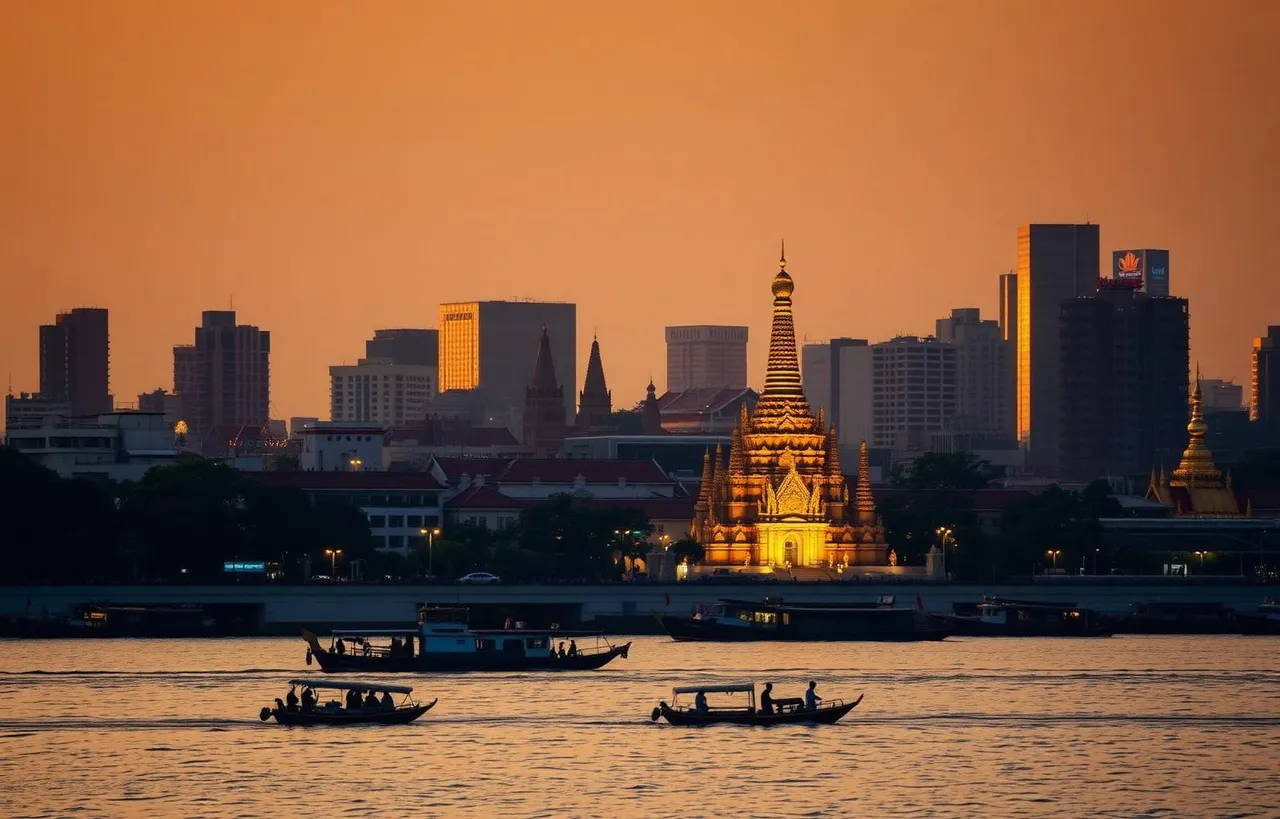
When to go & how long you need
Bangkok's high season runs November to February, when humidity drops and evenings are pleasant. March to May is brutally hot (35–40 °C). June to October brings short, intense afternoon downpours but cheaper hotels and a greener city. Three days is the right minimum for first-timers: enough for the headline temples, one market day, the river, and one nightlife evening. Add a fourth day if you want a Damnoen Saduak floating-market or Ayutthaya day trip without sprinting.
Land at Suvarnabhumi (BKK) rather than Don Mueang (DMK) if you have the choice — the Airport Rail Link reaches the city in 26 minutes for 45 baht and avoids airport-taxi haggling on arrival.
Where to stay in Bangkok
Pick your neighbourhood by what you want from the trip. Sukhumvit (Asok / Nana / Phrom Phong) is the easiest first-time base — modern, walkable, sitting directly on the BTS Skytrain, with everything from $20 hostels to $300 five-stars. Silom / Sathorn is similar but more business-district, better for rooftop bars and the river. Riverside (Khlong San / ICONSIAM) trades convenience for amazing views and easy boat access. Khao San Road is the classic backpacker strip — cheap, lively, but a 30-minute Grab from the Skytrain.
For mid-range comfort near transit, look at hotels around Asok BTS: clean 4-star rooms run $50–$90, breakfast included, with malls and street food downstairs. Booking 4–6 weeks ahead in high season usually saves 20–30 %.
Day 1 — Old City & temples
Start early. Grand Palace and Wat Phra Kaew open at 08:30 and the queues triple by 10:00. Dress code is strict — covered shoulders and knees, no leggings or transparent trousers; rentals are available but slow. Allow 2.5 hours inside (entrance 500 baht / ~$14).
From the palace, walk 15 minutes south to Wat Pho for the 46-metre Reclining Buddha and a 30-minute traditional Thai massage in the on-site school — easily the best $14 you'll spend in Bangkok. Cross the river on the 5-baht ferry to Wat Arun, the Temple of Dawn, and climb the central prang for the postcard view of the old city skyline.
End the day on the riverfront in Tha Tien or hop the orange-flag commuter boat down to Asiatique for a sunset dinner. If you only do one boat ride in Bangkok, make it this one.
Skip private temple tours. The combo of public ferry + walking covers everything in one self-guided morning for under $20 total entrance fees.
Day 2 — Markets, malls & rooftops
If it's a weekend, Chatuchak Weekend Market is non-negotiable. Over 15,000 stalls across 35 acres — clothes, art, plants, antiques, street food. Take the MRT to Kamphaeng Phet and arrive by 10:00 to beat the worst heat. Plan 3–4 hours, eat lunch inside (mango sticky rice, coconut ice cream in coconut shell).
Weekday alternative: Or Tor Kor Market next door (premium produce, cleaner, less chaotic) plus JJ Green night market later.
Afternoon: shop one of the air-conditioned megamalls — ICONSIAM for design and the SookSiam food hall, Siam Paragon for the aquarium and luxury brands, EmSphere / EmQuartier for cooler crowds. All sit on the BTS.
Sunset rooftop: Sky Bar at Lebua (the Hangover II one) is iconic but expect 700-baht cocktails and a strict dress code. Better value: Vertigo at Banyan Tree, Cielo Sky Bar, or the much cheaper Above Eleven in Sukhumvit Soi 11.
Day 3 — Day trip or river day
Choose your adventure based on what you missed. Ayutthaya day trip (1.5 hours by train, 20 baht each way, or join a guided tour with bike rental for ~$40) is the best half-day historical excursion in Thailand — UNESCO ruins of the old Siamese capital, dramatic Buddha head wrapped in tree roots, easy cycling between temples.
Damnoen Saduak + Maeklong railway market combos are touristy but photogenic — book a small-group tour for 800–1,200 baht to avoid the 4 a.m. start. The railway market, where stalls fold up seconds before the train rumbles through, is genuinely unique.
If you'd rather slow down, do a Bangkok river day: morning at Bang Krachao (the 'green lung' of the city — rent a bike for 80 baht and ride jungle paths 15 minutes from downtown), lunch at a riverside café, evening dinner cruise on the Chao Phraya (Manohra Cruises and White Orchid are the safer-bet operators).
Book activities and day trips on Klook or GetYourGuide — usually 20–40 % cheaper than what hotel concierges offer, and you can cancel free up to 24 hours before.
Getting around: BTS, MRT, boats, Grab
Bangkok's traffic is legendary, so prioritise BTS Skytrain and MRT subway whenever possible. Both are air-conditioned, run 06:00–24:00, and cost 17–62 baht per ride. Grab a Rabbit Card for the BTS if you'll do more than four trips.
On the river, the orange-flag Chao Phraya Express (16 baht flat) is what locals use; the blue Tourist Boat (60 baht hop-on/off) makes commentary-led stops at the main temples.
Grab (the local Uber) is reliable, English in-app, and roughly 80–200 baht for most cross-town trips. Always insist on the meter if you take a metered taxi off the street; if the driver refuses, walk to the next one — there are thousands.
Tuk-tuks are fun once for the experience but cost more than a Grab and are sometimes used in scam routes (see below). Negotiate the price before getting in.
What to eat (and where)
Bangkok is arguably the best street-food city on earth. You don't need fancy restaurants — your best meals will cost 50–150 baht ($1.50–$4) at a plastic-stool stall.
Must-eats: pad kra pao (basil chicken/pork over rice with a fried egg), boat noodles (intensely savoury noodle soup, originally served from boats — head to Victory Monument), som tam (papaya salad — ask for 'mai phet' if you want it mild), khao soi (northern coconut-curry noodles), mango sticky rice, and a pad Thai from Thip Samai in the old town.
Three reliable street-food zones: Yaowarat (Chinatown) after 18:00 for seafood, dim sum and bird's-nest dessert; Soi 38 / Soi 36 Sukhumvit for late-night noodles and grilled meats; Ari for cool, hipster spots where young Bangkokians actually eat.
Food poisoning is rare at busy stalls with high turnover. Avoid stalls where food sits in the sun, raw shellfish, and tap-water ice (most cubes with a hole through the middle are factory-made and safe).
How much 3 days in Bangkok costs
Daily costs in 2026, per person, excluding international flights:
Budget backpacker: $30–$45/day. Hostel dorm ($8–$12), street food and 7-Eleven meals ($8), public transit ($3), one paid temple/activity ($10).
Mid-range: $80–$130/day. 4-star Sukhumvit hotel ($55–$80), mix of street and mid-range restaurants ($20), Grabs ($8), one major attraction or cruise ($25).
Comfort / luxury: $200+/day. 5-star riverside hotel ($180–$400), fine-dining dinners, private transfers, spa, premium rooftop bars.
Total 3-day estimate: $90–$135 budget, $240–$390 mid-range, $600+ comfort. Add ~$30 for airport transfers in and out.
Common scams to avoid
Bangkok is genuinely safe, but a handful of well-rehearsed scams target tourists. Knowing them takes the sting out.
'The temple is closed today' — a friendly stranger near the Grand Palace tells you it's a Buddha day, then steers you to a tuk-tuk doing a 'special tour' that ends at a gem shop. The palace is open daily 08:30–15:30; ignore anyone outside the gates.
Tuk-tuk gem / suit shop tours — 'cheap' 20-baht tours are paid for by commission from gem shops. The 'export-quality' gems are worthless. Politely refuse and walk.
Taxi 'no meter, 400 baht' — always insist on 'meter, please'. If they refuse, get out and take another. Grab eliminates the problem entirely.
Jet-ski deposits in Pattaya, fake monk donations, and over-priced ping-pong shows round out the classics. None are dangerous — just avoid them with a polite 'no thank you'.
Frequently asked questions
Is 3 days enough for Bangkok?+
Yes for first-timers. Three days covers the major temples, one market day, the river, food and one nightlife evening. Add a fourth day if you want a relaxed Ayutthaya or floating-market day trip.
Where should I stay in Bangkok for the first time?+
Sukhumvit around Asok or Nana BTS is the easiest base: modern hotels, on the Skytrain, lots of food, malls and nightlife within walking distance. Silom is a similar alternative; the riverside is best for views; Khao San for backpackers.
How much does 3 days in Bangkok cost?+
Budget travellers spend $90–$135 over three days, mid-range travellers $240–$390, and comfort travellers $600+. International flights and airport transfers are extra.
Is Bangkok safe for tourists?+
Yes — violent crime against tourists is rare. The risks are scams (gem shops, fake closed temples, no-meter taxis), monsoon flooding, and traffic when crossing roads. Use Grab, insist on metered taxis, and ignore strangers steering you elsewhere.
Do I need a visa for Thailand?+
Most Western passport holders (US, UK, EU, Australia, Canada) get 60-day visa-exempt entry on arrival as of 2024. Always confirm with your embassy before flying as rules occasionally change.
What's the best time of year to visit Bangkok?+
November to February is the high season: cooler, drier, comfortable evenings. March to May is extremely hot. June to October is rainy season with short intense downpours, hotter prices and far fewer tourists.
Topics & destinations
Some links may be affiliate links. We may earn a commission at no extra cost to you.