Quick answer
The best overall time to visit Bali is April–June or September–early October — dry weather, lower prices than peak July–August, and noticeably fewer crowds. July and August are the busiest months (European and Australian school holidays); January and February are the wettest. If you can move your trip by 2 weeks, do it.
Avoid Easter, Christmas/New Year, Chinese New Year and Australian school holidays (mid-April, late June–July, late September) for the lowest hotel and villa prices.
Dry season — May to September
Dry season delivers the picture-postcard Bali: blue skies, low humidity, almost no rain, and reliable sunsets. Temperatures sit around 27–30 °C day, 22–24 °C night. Best for surfing the west coast (Uluwatu, Canggu), snorkelling around Menjangan and Nusa Penida, and motorbike loops through the rice terraces.
The downsides are crowds and price. July and August see hotel rates 40–80% above shoulder months; villa rates can double. Book Ubud, Canggu and the Bukit at least 6–8 weeks ahead in peak; Nusa Lembongan and Lombok now sell out too.
Wet season — November to March
Wet season Bali is misunderstood. It rarely rains all day — what you get is heavy afternoon storms (1–3 hours) followed by clear evenings, plus brilliant green rice paddies. January and February are the wettest months and the only ones I genuinely advise against if a beach holiday is your priority.
The trade-off: hotels are 30–50% cheaper, Bali feels half-empty, and east-coast destinations (Sanur, Amed, Candidasa) get less rain than the west. Wet season is also peak season for the cultural east — Ubud, Sidemen and Munduk look their best green and misty.
Shoulder months — the sweet spot
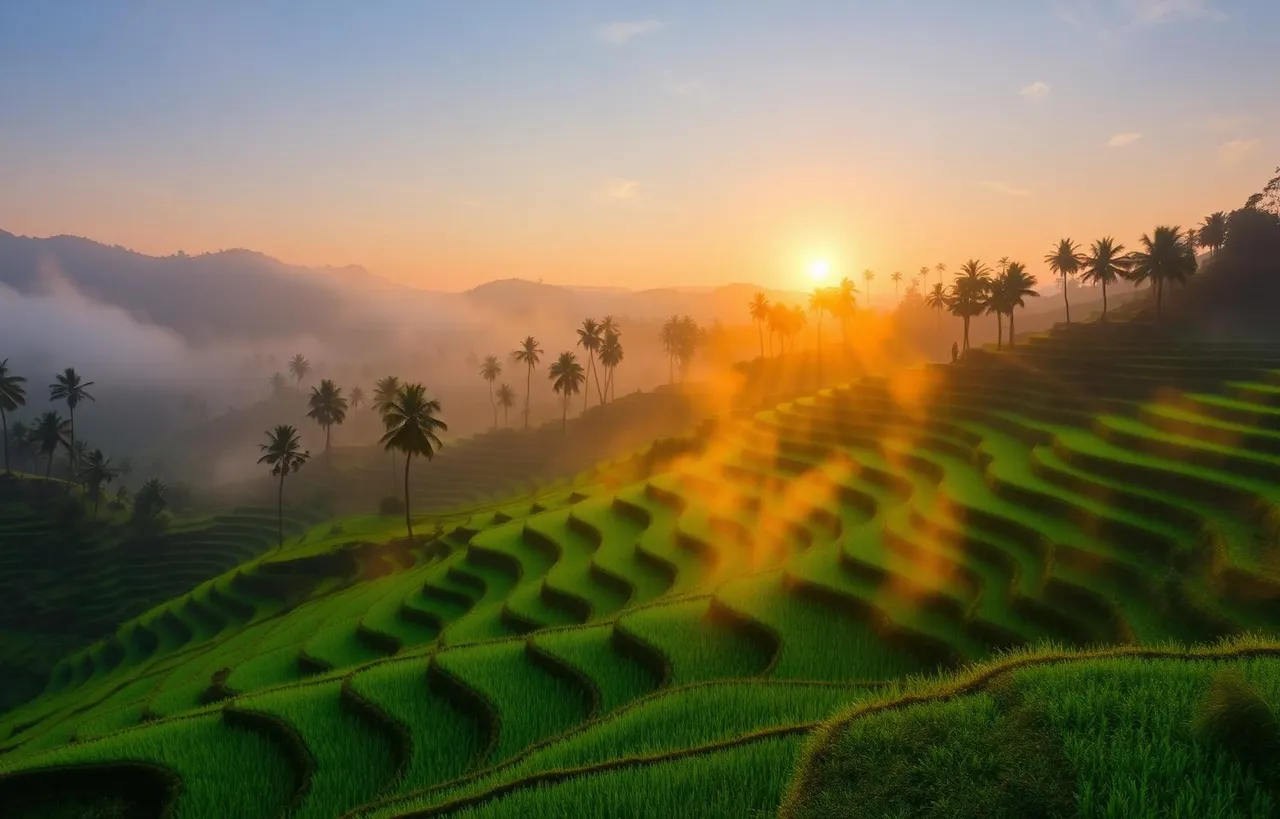
April–early June and mid-September–mid-October are the sweet-spot windows most travellers miss. You get 90% of dry-season weather with 50–60% of the prices and a fraction of the crowds. April is particularly underrated — the rice fields are still emerald green from the wet season but rain has tapered off.
If you can only go once and want the best mix of weather, price and atmosphere, go in late April, mid-May or late September. These weeks are when long-stay digital nomads quietly extend their trips.
Bali month-by-month
- January — wettest month, cheapest hotels, green landscapes
- February — still wet, very quiet, surf on the east coast
- March — drying out; Nyepi (Bali Day of Silence) closes the island for 24h
- April — sweet spot: dry, green, mid-priced
- May — peak shoulder, dry, blue skies, manageable crowds
- June — perfect weather; prices start to rise late month
- July — peak season, hot and dry, busy and expensive
- August — busiest month of the year; book everything early
- September — sweet spot returns mid-month
- October — last good month; chance of rain returns late
- November — rains start; prices drop; great for budget travellers
- December — Christmas/NYE spike; very wet otherwise
Bali budget by season
Hostel beds run $8–15/night year-round. Mid-range hotels and villas swing from $45 (wet season) to $130+ (peak). A private villa with pool that sleeps 4 costs $120/night in May and $260/night in August. " + A("Compare Bali hotels", "hotels") + " across two date windows to see the swing.
Daily food and activity costs barely change with season: $35–50/day budget, $70–100 mid-range. The big variables are accommodation and flights. Compare cheap flights to Bali across April vs August for the same airline — you'll often see a 40% gap.
Festivals and closures
Nyepi (Day of Silence) in March is Bali's most important Hindu festival — for 24 hours the entire island shuts down, including the airport. No flights, no taxis, no leaving the hotel. Magical to experience but you must plan around it. Date: 19 March 2026.
Galungan and Kuningan (10-day Hindu celebration, twice yearly) are beautiful but don't close anything. Bali Arts Festival (mid-June to mid-July) is excellent in Denpasar.
Surf seasons by coast
Bali is a year-round surf destination because the two coasts work in opposite seasons. West coast (Canggu, Uluwatu, Bingin) is best in dry season (May–September) with offshore trades. East coast (Keramas, Nusa Dua) is best in wet season (November–March).
Book your surf lessons or boat trips through local surf and activity providers rather than at the beach — better instructors and better prices.
Some links in this guide may be affiliate links. If you book through them we may earn a small commission at no extra cost to you — it helps keep the guides free and updated.
Frequently asked questions
What is the cheapest month to visit Bali?+
February. Wet-season prices on hotels and villas are at their lowest and crowds are minimal. The trade-off is the most rain of the year, but most days still have several hours of sun.
When is Bali least crowded?+
Mid-January to late March (except Nyepi) and the first three weeks of November. You get the island almost to yourself — useful if you want quieter beaches, easier restaurant bookings and lower villa prices.
Is Bali nice in the rainy season?+
Yes, especially Ubud, Sidemen and the east coast. Rain usually falls in 1–3 hour bursts, often in the afternoon, leaving mornings and evenings clear. January and February are the only months I would actively avoid for a pure beach trip.
When is the best time for surfing in Bali?+
May–September on the west coast (Uluwatu, Canggu), November–March on the east coast (Keramas, Nusa Dua). Beginners should aim for the dry season — water is calmer and lessons are easier.
Should I avoid Bali during Nyepi?+
Plan around it, not avoid it. Nyepi is a unique 24-hour island-wide silence — no flights, no movement outside hotels. Many travellers find it the most memorable part of their trip if they're prepared.
Topics & destinations
Some links may be affiliate links. We may earn a commission at no extra cost to you.