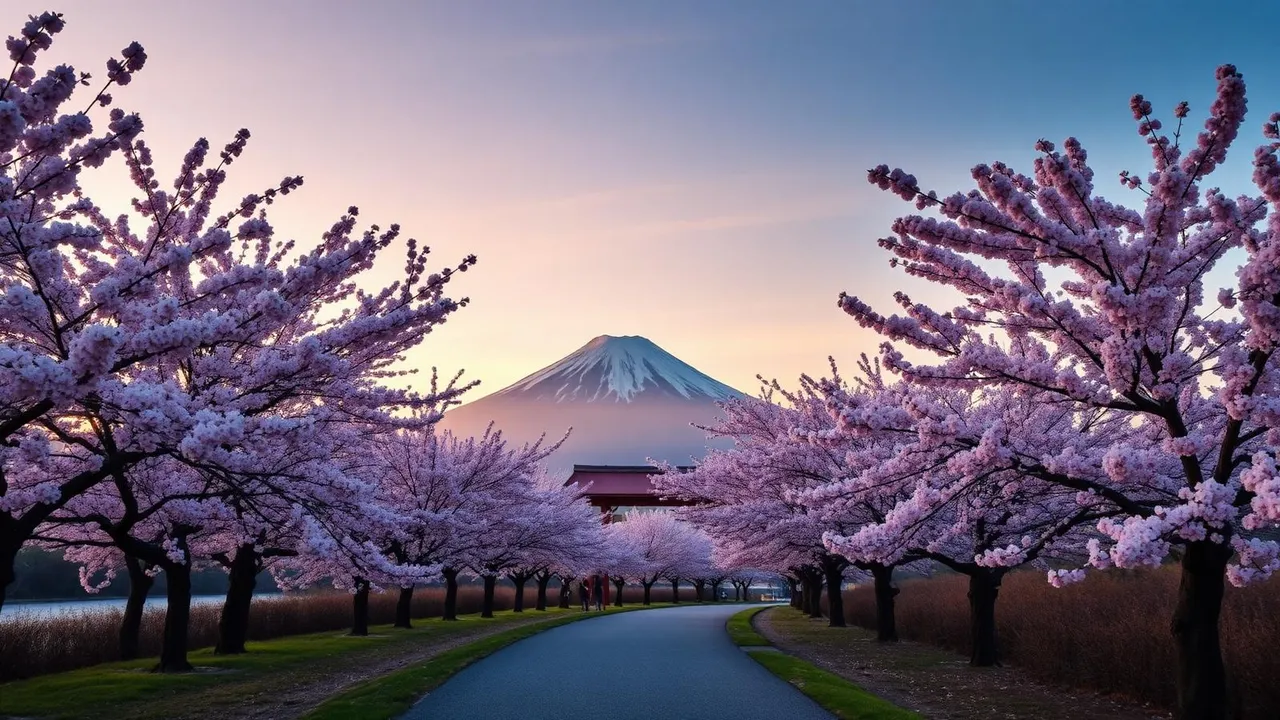
Quick answer: when is the best time to visit Japan?
If you only want one answer: late March to early April for cherry blossoms, or mid-November for autumn leaves. Both windows offer mild weather (12-18°C), almost no rain, and the country at its most photogenic. The trade-off is crowds and price — hotels in Tokyo and Kyoto can double during sakura week, and flights book out three months ahead.
If you want the best value, target mid-May to early June or late September to mid-October. The weather is warm but not yet humid, prices drop 30-40%, and the major tourist trails are noticeably quieter. Ski travelers should aim for January to mid-February when Hokkaido and Nagano get the deepest powder of the season.
Avoid Golden Week (29 April - 5 May), Obon (mid-August) and New Year (28 December - 5 January). These are the three weeks a year when domestic travel peaks: trains sell out, prices spike, and many small shops close for the holiday.
Lock in flights 90-120 days out for sakura and koyo trips. For shoulder-season travel, 6-8 weeks ahead is usually enough to score a fair price.
The four seasons in Japan at a glance
Japan stretches from sub-tropical Okinawa in the south to snowbound Hokkaido in the north, so any seasonal guide is really a regional guide. That said, the four-season rhythm is the heart of Japanese culture, and most travelers plan around it.
Spring (March-May) is mild, with daytime highs climbing from 12°C in March to 24°C in May. It is the most popular season — cherry blossoms, school holidays, and a packed festival calendar. Summer (June-August) opens with a three-week rainy season (tsuyu) then turns hot and humid, with Tokyo regularly hitting 33°C and 80% humidity. Fireworks, mountain hikes and beach trips dominate.
Autumn (September-November) starts hot but mellows fast. October and November are arguably the best travel months: clear skies, comfortable temperatures, and the koyo (autumn-leaf) season turning Kyoto into a slow-burning fire of red and orange. Winter (December-February) is cold and dry in Tokyo and Kyoto (3-9°C), heavily snowy on the Sea-of-Japan coast and in Hokkaido, and warm enough for beach time in Okinawa (20°C).
- Spring: cherry blossoms, mild temps, biggest crowds
- Summer: festivals and fireworks, but humid and stormy
- Autumn: best balance of weather, scenery and value
- Winter: skiing up north, dry sunny days in Tokyo, off-peak prices
Cherry blossom season (sakura): late March to mid-April
Cherry blossom season is shorter than most travelers expect — typically only 7-10 days of peak bloom in any one city. The wave starts in Fukuoka and Kyushu around 20 March, sweeps through Kyoto and Tokyo by the first week of April, and reaches Hokkaido by early May. The Japan Meteorological Corporation publishes a forecast in early March each year that is reliable within two or three days.
The best strategy is to chase the front rather than plant yourself in one city. A common itinerary is Tokyo > Hakone > Kyoto > Hiroshima > Osaka, moving roughly one city every two days. If your dates are fixed, build flexibility into where you go: arrive in Tokyo, then pivot north or south based on the latest bloom forecast.
Expect prices to be at their annual peak. Mid-range hotels that normally run 12,000 yen jump to 22,000-28,000 yen, and the cheapest direct flights from Europe and North America are often double a normal shoulder-season fare. Booking a JR Pass before the trip is still worth it for the long hops; just remember the pass no longer covers the fastest Nozomi shinkansen since the 2023 reforms.
Hanami (cherry-blossom viewing) is a picnic culture. Buy a tarp at any 100-yen shop, grab konbini snacks, and join the locals under the trees at Ueno Park, Maruyama Park or the Philosopher's Path. It is free, it is fun, and it is the most authentic way to do sakura.
Summer (June-August): rainy season, festivals and mountain escapes
Most guidebooks tell you to avoid Japan in summer. That is half true. June brings the tsuyu rainy season — about three weeks of grey skies and steady drizzle, perfect for hydrangea gardens and indoor museums but rough on temple-hopping. By mid-July it clears, and the heat begins.
July and August are when Japan truly comes alive after dark. Almost every town hosts a summer matsuri (festival) with food stalls, taiko drums, and fireworks (hanabi). The big-name events — Kyoto's Gion Matsuri, Aomori's Nebuta, Tokyo's Sumida River fireworks — pull millions, so book accommodation a month ahead.
To escape the heat, head up. The Japan Alps (Kamikochi, Hakuba, Norikura) sit at 1,500 meters and stay 10°C cooler than Tokyo. Hokkaido is at its absolute best in July and August, with lavender fields in Furano and easy hiking in Daisetsuzan. Okinawa is hot but the sea is at 27°C and visibility for diving is the year's best.
- Tsuyu rainy season: roughly 7 June - 21 July in Tokyo
- Peak humidity and heat: late July through mid-August
- Typhoon risk: small but real from late August onward
- Best summer escapes: Hokkaido, Nagano, Tohoku highlands
Autumn leaves (koyo): mid-October to early December
Autumn-leaf season is the local secret that international travelers are finally catching on to. Like sakura, it sweeps the country from north to south — starting in Hokkaido in mid-September and reaching Kyoto and Tokyo around the third week of November. Peak in Kyoto is typically 18-28 November, and the city is stunning: maple-fringed temples, mossy gardens, illuminated by gentle floodlights after dark.
Crowds are real but more spread out than spring. The biggest difference: hotel prices in November are typically 20-30% lower than during cherry-blossom week, and flights are noticeably cheaper. If you can only travel once and have to choose between sakura and koyo, many repeat visitors quietly recommend koyo for the weather, the value, and the slower pace.
Top koyo spots to plan around: Tofuku-ji and Eikando in Kyoto, Mount Takao day-trip from Tokyo, Kamikochi in the Japan Alps, Nikko's Iroha-zaka switchback, and Lake Towada in Tohoku. Book a quiet ryokan with an onsen — the cold air, hot bath, and a kaiseki dinner is the textbook autumn-in-Japan moment.
An eSIM is the easiest way to stay online and chase live foliage updates — Japan's official koyo forecast site updates daily and is the most reliable source. Skip the airport SIM kiosk: a 10-day plan bought before you fly costs about a third as much.
Winter (December-February): powder snow and quiet temples
Winter is Japan's most underrated season for international travelers. Tokyo and Kyoto get cold (highs around 9°C, lows just above freezing) but they almost never snow, the skies are crystal clear, and the temples — emptied of summer crowds — feel almost private. Mount Fuji is also at its photogenic best, capped in snow against a deep blue sky.
The real headline is skiing. The Japan Sea coast of Honshu and the whole of Hokkaido sit in a perfect snow-loading pattern: Siberian air picks up moisture over the warm sea, dumps it as ultra-dry powder on the mountains. Niseko, Hakuba, Nozawa Onsen and Furano routinely get 10-15 meters of snow per season. Lift tickets are about half the price of comparable Alpine resorts, and the onsen-after-skiing combination is uniquely Japanese.
Outside the ski resorts, prices in December and January (excluding the New Year week) are some of the best of the year. Hotels in Kyoto can be 35% below their April rates, flights from North America and Europe are noticeably cheaper, and the country's famous winter foods — ramen, oden, hot pot, hot sake — are in season.
- Skiing: late December to mid-March in Hokkaido and Nagano
- Snow Festival in Sapporo: first week of February
- Sunny dry days in Tokyo and Kyoto: 5-12 December and 8-25 January
- Onsen season: any time, but best when the air is freezing
Cheapest months to fly to Japan
Two windows give consistent flight-deal value: late January to early March (excluding Lunar New Year, when flights from China and Korea spike) and mid-May through mid-June. Return economy fares from London, New York or Sydney drop 25-40% versus April or November.
Mid-week departures (Tuesday/Wednesday) beat weekend flights by another 10-15%. If your dates are flexible, set a Google Flights price alert across a 30-day window and book the moment the alert triggers — Japan-bound fares are volatile and the best prices often last only a day or two.
Don't forget point of arrival. Tokyo gets the highest volume of long-haul flights, so it is usually cheapest, but Osaka (Kansai International) is often within 50 dollars and saves you a bullet-train fare to Kyoto. For ski trips, fly direct into Sapporo (Chitose) if you can — connecting through Tokyo in winter is the most weather-disrupted leg in the country.
Three weeks to avoid (unless you have to)
Golden Week (29 April - 5 May) is a chain of four national holidays. Domestic travel grinds to a halt: shinkansen tickets sell out four weeks ahead, hotel prices in Kyoto and Osaka double, and even ryokan in small mountain towns are fully booked. The weather is otherwise perfect, which is why locals all travel — but international visitors usually have a better experience by shifting plans by a week in either direction.
Obon (around 13-16 August) is the summer ancestor festival. Trains and flights from Tokyo and Osaka to the countryside are packed, while major cities empty out. If you are city-based, this can actually be a quiet week to visit Tokyo — but moving around the country is painful.
New Year (28 December - 5 January) is the quietest, weirdest week of the year. Many restaurants, small museums and family-run guesthouses close for the holiday. The flip side: temple visits at midnight on New Year's Eve are unforgettable. Just be ready for limited dining options and book ahead.
What to pack by season
- Spring (Mar-May): light layers, packable rain jacket, comfortable walking shoes
- Summer (Jun-Aug): linen and quick-dry, sun hat, small towel, refillable water bottle
- Autumn (Sep-Nov): mid-weight sweater, scarf, light gloves for November in Kyoto
- Winter (Dec-Feb): down jacket, thermal base layer, beanie, traction-soled shoes for snow regions
Whatever the season, two universals apply: cash (many small shops and rural buses are still cash-only) and a portable charger. Konbini ATMs (7-Eleven, Lawson) accept foreign cards reliably, so you do not need to bring big stacks of yen from home.
Whichever month you pick, build in one slow day per major city. Japan rewards the traveler who has time to wander a back-street, sit at a kissaten coffee bar, or watch the snow fall on a moss garden. The country is at its best when you stop trying to tick a list and just let it unfold.
Frequently asked questions
What is the absolute best month to visit Japan?+
April for cherry blossoms and November for autumn leaves. Both offer mild weather and the most iconic scenery, with November typically 20-30% cheaper than April.
Is it worth visiting Japan in summer?+
Yes, if you head to Hokkaido or the Japan Alps to escape the humidity. The festival season is incredible. Avoid July-August if you only plan to do temples and walking tours in Kyoto.
When is the rainy season in Japan?+
Tsuyu runs from about 7 June to 21 July in Tokyo and most of Honshu. Hokkaido has no rainy season, which makes it a great June destination.
Is winter a good time to visit Japan?+
Winter is excellent. Tokyo and Kyoto are dry and clear, prices are off-peak, and Japan has world-class skiing in Hokkaido and Nagano. Just avoid 28 December - 5 January for New Year closures.
How far in advance should I book a Japan trip?+
Three to four months for cherry-blossom or autumn-leaf season. Six to eight weeks is usually fine for shoulder season. Ski accommodation in Niseko should be booked six months ahead.
Topics & destinations
Some links may be affiliate links. We may earn a commission at no extra cost to you.