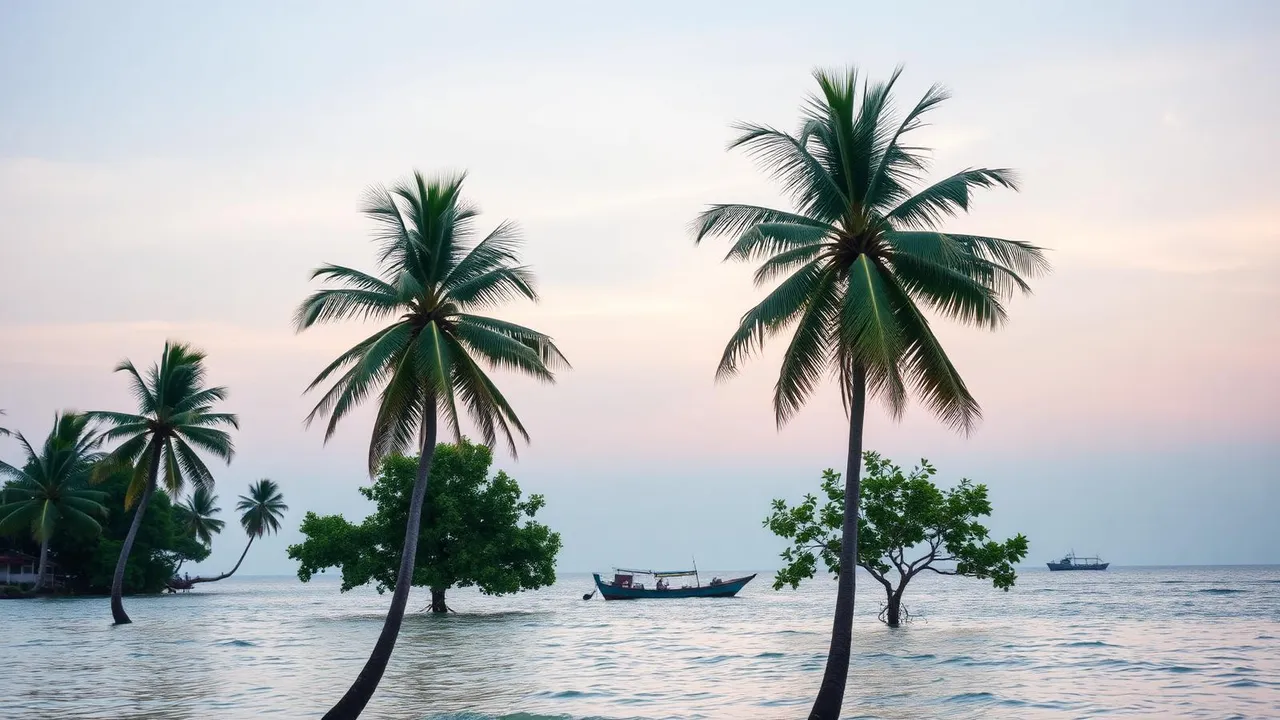
How Southeast Asia's seasons work
There are roughly three weather systems to keep in mind. First, the southwest monsoon (roughly May–October) brings rain to Thailand's Andaman coast, Bali, west Sumatra, west Malaysia and the west Philippines. Second, the northeast monsoon (roughly November–March) brings rain to Thailand's Gulf coast (Koh Samui, Koh Phangan), east Malaysia (Perhentians, Tioman) and the east Philippines. Third, northern Vietnam follows a temperate pattern with a cool winter (December–February) that can drop below 10°C in the mountains.
The practical takeaway: there is almost always somewhere in Southeast Asia with great weather. The trick is matching your destination to the calendar, not the other way around.
Month-by-month overview
January. Peak dry season in most of the region. Andaman Thailand (Phuket, Krabi), Bali, Cambodia, central Vietnam and the Philippines are all reliable. Northern Vietnam is cool and misty — beautiful in Sapa, less so for the beach. Hotel prices are at their highest.
February. Same dry pattern as January with slightly fewer crowds. Tet (Vietnamese New Year) typically falls in late January or February — domestic travel and many businesses pause for a week. Plan your Vietnam trip around it.
March. Last reliable dry month for most of the region. Bali, Lombok, Phuket and the Philippines are great. Temperatures rise everywhere; central Thailand starts pushing 35°C+ inland.
April. Hottest month across mainland Southeast Asia (Thailand, Cambodia, Laos can hit 40°C). Songkran (Thai New Year, 13–15 April) is a country-wide water festival — book accommodation early. Bali starts shoulder season with occasional showers.
May. Start of the southwest monsoon. Phuket, Krabi and Bali see afternoon storms; Koh Samui and the Gulf islands are still good. The Philippines (Palawan, Cebu) remains mostly dry until June. Prices drop.
June. Wet on the Andaman coast and Bali, but rain is short and tropical, not all-day. Vietnam's central coast (Da Nang, Hoi An) is hot and mostly dry. Northern Vietnam is humid and prone to storms. Great value if you don't mind some rain.
July. Northern hemisphere summer holiday rush — European families fill Bali and Phuket despite the showers. Indonesia's dry islands (Komodo, Flores, Sumba) are at their best. Vietnam's coast remains hot and sunny.
August. Continuation of July. Bali is dry-ish despite being technically wet season. The Philippines is firmly in typhoon territory in the north (Luzon).
September. Quietest month of the year in many destinations. Showers across most of the region, but Bali starts to dry, and northern Vietnam moves into its loveliest stretch with cooler temperatures and rice-terrace gold in Sapa.
October. Northern Vietnam's prime month. Central Vietnam (Hoi An, Hue) is wettest now and prone to flooding. The Gulf islands of Thailand start their wet season as the Andaman finishes.
November. Dry season returns across Andaman Thailand, Bali, the Philippines and Cambodia. Loi Krathong and Yi Peng (Chiang Mai's lantern festival) usually fall in November — magical and crowded.
December. High season is back. Christmas and New Year are the most expensive two weeks of the year in Bali, Phuket and Boracay — book 3+ months ahead. Northern Vietnam is cool and dry; lovely for cities.
Best month per country
If you only remember one line per destination, remember these.
Thailand (Andaman — Phuket, Krabi): December–March.
Thailand (Gulf — Koh Samui, Koh Phangan): February–April and July–September.
Vietnam (north — Hanoi, Sapa, Ha Long): October–November and March–April.
Vietnam (central — Hoi An, Da Nang): February–May.
Vietnam (south — HCMC, Phu Quoc): December–April.
Indonesia (Bali, Lombok): May–October.
Malaysia (west coast, KL, Langkawi): December–March.
Malaysia (east coast, Perhentians, Tioman): March–October.
Philippines (Palawan, Cebu, Siargao): December–April.
Best months for beach trips
If your trip is all about the beach, your decision tree is simple. December–March: Andaman Thailand, Bali (early/late only), Palawan, Phu Quoc. April–May: Koh Samui, Bali, Boracay. June–September: Komodo, Lombok, dry islands of Indonesia. October–November: shoulder season — book carefully, especially Hoi An which floods.
For diving specifically, Komodo and Raja Ampat shine April–November, Koh Tao is reliable February–April and July–September, and the Philippines (Apo Reef, Anilao) is best November–May.
Best months for trekking
Sapa and Ha Giang in northern Vietnam are at their best in September–November (cool, dry, rice terraces turning gold) and again March–May. Chiang Mai and Pai trekking is comfortable November–February. Bromo and Ijen in East Java are best May–October. Mt. Pinatubo and the Philippine cordillera are dry-season classics — January–April.
Avoid trekking during peak monsoon (June–August on west Indonesia, July–October in the Philippines) — trails get slippery and views disappear into cloud.
Best months for budget travelers
The cheapest months to fly to Southeast Asia from Europe and North America are mid-January (after the holidays), May–June, and September–early October. Long-haul fares can be 30–40% lower than December peaks.
Hotel prices in Bali, Phuket and Boracay drop 30–60% in the shoulder months of May and September–October. Same hotel, same room, half the rate — and you'll usually trade 1–2 rainy hours a day for empty beaches.
If budget is the main filter, target May, June or September. Stay flexible on destination; if Bali's rainy, head to Komodo or Sumba instead.
Festivals to plan around
Songkran (Thailand): 13–15 April. The world's largest water fight. Magical in Chiang Mai and Bangkok; book everything early. Long-distance travel pauses.
Tet (Vietnam): dates shift; typically late January or early February. Vietnamese Lunar New Year. Domestic transport packed, many shops closed for a week. Beautiful in Hanoi but logistically tricky.
Nyepi (Bali): typically March. Day of Silence — entire island shuts down for 24 hours, no flights in or out of Denpasar. Either embrace it or fly out the day before.
Loi Krathong / Yi Peng (Thailand): November. Floating lanterns and rivers full of candles. Chiang Mai is the postcard moment.
Galungan (Bali): twice a year. Temples and streets decorated with penjor bamboo arches. Beautiful, no travel disruption.
Plan your Southeast Asia trip
Once you've picked your month, the booking steps are the same everywhere.
Frequently asked questions
What's the overall best month to visit Southeast Asia?+
February. It's dry across Thailand, Bali, Vietnam, the Philippines and Cambodia, temperatures haven't peaked yet, and the December holiday crowds have left. The only catch is Tet in Vietnam, which usually falls in February.
When is the cheapest time to visit Southeast Asia?+
Mid-May to early June, and September to early October. Flights are 30–40% cheaper than December, hotels drop 30–60% in beach destinations, and you'll trade short tropical showers for half-empty beaches.
Is the rainy season really that bad in Southeast Asia?+
Usually not. Rain is typically a 1–2 hour tropical downpour in the afternoon, not all-day drizzle. Bali in June is still beach-friendly most days. The exception is central Vietnam in October–November (real flooding) and Philippines typhoon season in August–October.
Should I avoid Bali during Nyepi?+
Only if you can't sit still for 24 hours. The whole island shuts down — no flights, no traffic, lights out, even the airport closes. Many travelers love the silence and stargazing; others fly out the day before. Plan deliberately either way.
Topics & destinations
Some links may be affiliate links. We may earn a commission at no extra cost to you.