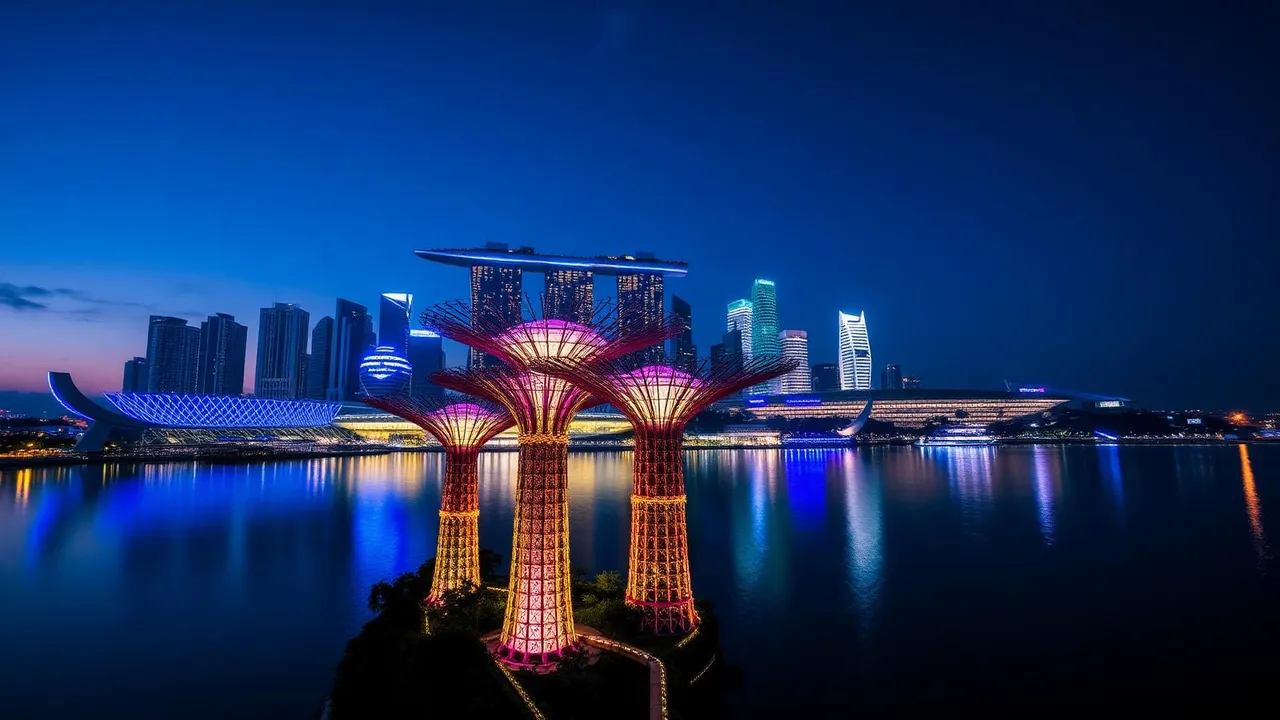
Trip overview: what 3 days in Singapore really costs
Singapore is the most expensive country in Southeast Asia, but it is also the most efficient — which means budget travelers can keep costs surprisingly low if they make a few smart choices. A realistic daily spend for a backpacker is 60-80 SGD (45-60 USD), and a comfortable mid-range traveler will spend 140-180 SGD per day (100-135 USD), all included.
Where the money actually goes: accommodation eats the biggest share (50-90 SGD for a hostel dorm, 130-200 SGD for a 3-star hotel), then food (8-25 SGD per meal at hawker centres), transport (about 8-12 SGD a day on the MRT), and attractions. The trick is to lean on Singapore's two superpowers — its incredible street food and its free public spaces — and pay for only two or three signature paid experiences.
Three days is genuinely enough. Singapore is a small island (50 km long, 27 km wide) with a brilliant metro system, so you can comfortably cover the icons, two ethnic neighborhoods, and one half-day beach without ever feeling rushed.
- Budget traveler: 60-80 SGD per day all-in
- Mid-range traveler: 140-180 SGD per day
- Direct flights from Bangkok or KL: from 60 USD return
- Visa: free on arrival for most nationalities (90 days)
Getting around Singapore: the MRT is your friend
Forget taxis and ride-hailing unless you are out past midnight. The MRT (subway) is air-conditioned, clean, almost always punctual, and reaches every major attraction. A single ride is 0.90-2.40 SGD. Tap any contactless credit or debit card at the gate — no ticket purchase needed. If your card has foreign-transaction fees, buy a stored-value EZ-Link card for 12 SGD at any station and top it up.
From Changi Airport, the cheapest route to the city is the MRT (East-West line), which takes about 35 minutes and costs around 2.50 SGD. The airport shuttle bus is 10 SGD, and a Grab to Marina Bay is 25-35 SGD depending on traffic. Unless you arrive after midnight (when the MRT stops running), there is no reason to spend more than 3 dollars getting into town.
Buses are useful for areas the MRT misses (like Tiong Bahru's quieter corners), and walking is realistic in the colonial core and along Marina Bay. Bring a refillable water bottle: Singapore tap water is safe to drink, and most malls and MRT stations have refill points. Skipping bottled water saves about 10 SGD over three days and a lot of plastic.
Buy an eSIM before you fly. A 5 GB Singapore plan costs around 6 USD, activates the moment you land, and means you can use Grab, Google Maps, and the LTA bus app without hunting for airport Wi-Fi or paying tourist roaming rates.
Where to stay in Singapore on a budget
The best budget neighborhoods are Chinatown, Bugis, Little India and Lavender. All four sit on the MRT, are walking distance to hawker centres, and have well-reviewed hostels and small hotels from 35-90 SGD a night. Avoid Sentosa unless you are splurging on a resort — it is a 30-minute MRT ride from the action.
For hostels, Chinatown is the social hub: dorms from 30 SGD, capsule beds from 45 SGD, and dozens of late-night noodle shops within a 5-minute walk. Little India is the most local and easily the best for cheap meals — a full Indian thali is 6-8 SGD. Bugis is the most central and a good base if you only have one night and want to maximize sightseeing radius.
Mid-range hotels in Singapore have shrunk rooms dramatically over the past decade — expect 15-20 square meters in anything under 200 SGD. Pick the hotel for location, not square footage. Tiong Bahru, Telok Ayer and Kampong Glam are excellent if you want a more boutique, neighborhood feel and don't mind a 5-minute MRT hop to the icons.
Day 1: Marina Bay, Gardens by the Bay and the skyline at night
Morning. Start at the Merlion Park (the famous lion-fish statue) early — by 9am the photo crowds arrive. Walk across the Helix Bridge to Marina Bay Sands, ride the escalators up through the shopping arcade (free), and exit on the bay side. Skip the SkyPark observation deck (26 SGD) and instead head straight to Gardens by the Bay.
Midday. The outdoor Supertree Grove and the bay-front gardens are free and gorgeous. The two paid conservatories (Flower Dome and Cloud Forest) are around 32 SGD combined and genuinely worth it if you have only one paid attraction in your budget — the Cloud Forest's indoor waterfall is the single most photographed spot in Singapore. Lunch in the basement food court at Marina Bay Link Mall: a chicken-rice meal is 6-8 SGD.
Evening. Head back to Marina Bay around 6:30pm and grab a bench facing Marina Bay Sands. At 8pm and 9pm the free Spectra water-and-light show runs for 15 minutes — one of the best free spectacles in any major city. After, walk the riverside to Clarke Quay for a beer (8-15 SGD) or push on to Lau Pa Sat hawker centre for satay street, which only opens after 7pm.
- Merlion Park (free)
- Helix Bridge walk and Marina Bay Sands arcade (free)
- Gardens by the Bay outdoor area (free)
- Cloud Forest + Flower Dome (~32 SGD, optional)
- Spectra light show at 8pm and 9pm (free)
Day 2: Chinatown, Tiong Bahru, Little India and Kampong Glam
Day two is about the four ethnic quarters that gave Singapore its character. Start in Chinatown with breakfast at Maxwell Food Centre — the chicken rice at Tian Tian (made famous by Anthony Bourdain) is 6 SGD and worth the queue. Walk to Buddha Tooth Relic Temple (free), then meander up Pagoda and Smith streets for the painted shophouses.
By late morning, take the MRT one stop to Tiong Bahru, Singapore's oldest housing estate and now its quietest hipster neighborhood. Independent bookshops, weekend brunch spots, and Tiong Bahru Bakery (famous for kouign-amann). It is the place to slow down before the afternoon heat kicks in.
Lunch at Tiong Bahru Market (top floor hawker centre, 5-8 SGD per dish), then ride to Little India for the Sri Veeramakaliamman Temple, the Tekka Centre wet market upstairs, and an early dinner of banana-leaf thali on Race Course Road. End the evening in Kampong Glam at Sultan Mosque, with rooftop shisha bars and the street art of Haji Lane. The whole day is walkable plus three short MRT hops.
If you want a guided street-food walk, Klook and GetYourGuide both offer small-group hawker tours from around 70 SGD. For a 3-day trip, it is the most efficient way to taste 6-8 iconic dishes without doing all the menu translation yourself.
Day 3: Sentosa, beaches and a final sunset
Sentosa is Singapore's purpose-built leisure island, connected to the mainland by a free-to-walk boardwalk, a 4 SGD monorail, and a 35 SGD cable car. For a budget day, take the boardwalk from VivoCity — it is shaded, scenic, and free. The three Sentosa beaches (Siloso, Palawan, Tanjong) are clean, free, and never crowded outside Singapore school holidays.
If you want to splurge on one paid attraction, Universal Studios Singapore (84 SGD adult) is genuinely good for a half-day, particularly if you are traveling with teens. Otherwise the free options are plenty: the Southern Ridges hike (a 10 km trail of canopy walkways), Fort Siloso (military history, free), and the simple pleasure of swimming and watching the cargo ships drift past.
Head back to the mainland by 5pm for one last sunset on the Henderson Waves bridge or the rooftop bar 1-Altitude (drink minimum applies). If you have one final hawker meal in you, MUST do laksa at 328 Katong Laksa (5 SGD) or chilli crab at Long Beach in East Coast (a bigger splurge at around 80 SGD for two). End at Changi Airport early — the airport itself is a Singapore attraction, with a free indoor waterfall (Jewel) you should not skip.
- Walk to Sentosa via the free boardwalk
- Siloso Beach for swimming (free)
- Southern Ridges canopy walk (free)
- Universal Studios Singapore (~84 SGD, optional)
- Jewel Changi Airport before your flight (free)
Hawker food survival guide
Hawker centres are how Singapore eats — open-air food courts with 30-60 stalls, most selling a single specialty dish for 4-8 SGD. The big four to know are Maxwell (Chinatown, chicken rice), Tiong Bahru Market (chwee kueh, kway chap), Lau Pa Sat (satay street at night), and Old Airport Road (the largest, with everything).
How it works: find a free seat first and put a packet of tissues on the table — that is the local code for 'reserved'. Order at the stall counter, pay cash or PayNow QR. Most stalls have a star rating from the Singapore Food Agency on the wall: A or B is fine, anything else is unusual to find.
Dishes to try at least once: Hainanese chicken rice, char kway teow, laksa, chilli crab (sit-down restaurant), satay, kaya toast breakfast, roti prata, and chwee kueh. Most cost 4-8 SGD and a hawker centre meal with a drink rarely tops 12 SGD. The taste-to-cost ratio in Singapore is the best in the country — possibly anywhere.
12 free things to do in Singapore
- Gardens by the Bay outdoor gardens and Supertree Grove
- Spectra light show at Marina Bay (twice nightly)
- Southern Ridges and Henderson Waves bridge
- Botanic Gardens (UNESCO-listed, free entry)
- Sentosa beaches via the boardwalk
- Jewel Changi Airport indoor waterfall
- Haji Lane street art and shophouses
- Buddha Tooth Relic Temple in Chinatown
- Sri Veeramakaliamman Temple in Little India
- National Gallery (Sunday admission deals; lobby always free)
- Civic District colonial walk
- Mount Faber Park lookouts
Stack three or four of these into a half-day and you will not feel like you missed a thing. Singapore quietly subsidizes its public spaces in a way few cities do, and a smart budget itinerary leans heavily on that.
Five mistakes first-time visitors make
1. Booking a hotel on Sentosa. Looks tropical, kills your sightseeing time. Stay on the mainland and visit Sentosa for a day.
2. Eating in malls. Mall food courts cost 12-18 SGD a meal for what hawker centres serve for 6 SGD. Walk the extra five minutes.
3. Taking taxis everywhere. The MRT is fast and 80% cheaper. Save taxis for late-night arrivals and groups of four.
4. Trying to do everything in one day. Singapore looks small on a map, but the heat and humidity slow you down. Two attractions per day is plenty in March-October.
5. Skipping Little India and Kampong Glam. These neighborhoods are where Singapore feels most lived-in, and they have the best-value food in the city. Both are 5 minutes from Marina Bay by MRT.
Three days, one mid-range hotel, hawker meals, MRT only, two paid attractions max — that is the budget Singapore template. Stick to it and you will leave under 500 SGD for the whole trip, food, transport and bed included.
Frequently asked questions
Is 3 days enough for Singapore?+
Yes. Three days is the sweet spot for first-time visitors — long enough to cover the icons, two neighborhoods, and a half-day on Sentosa, short enough to keep costs and pace under control.
How much should I budget for 3 days in Singapore?+
Backpackers can do it on 200-250 SGD all-in (excluding flights). Mid-range travelers should plan 450-550 SGD, and that already covers a comfortable 3-star hotel, MRT, hawker meals and two or three paid attractions.
What is the cheapest way to get from Changi Airport to the city?+
The MRT (East-West line) is around 2.50 SGD and takes about 35 minutes. Tap any contactless card at the gate — no ticket purchase needed. Avoid the airport limo and taxis unless you arrive after midnight.
Do I need cash in Singapore?+
Mostly no. The MRT, malls and most hawker stalls accept contactless cards or PayNow QR. Carry around 50 SGD in small notes for the few cash-only stalls and tipping (though tipping is not expected).
What is the best month to visit Singapore?+
February to April is driest and least humid. November to early January is the monsoon season with afternoon thunderstorms — still travel-friendly but pack a small umbrella.
Topics & destinations
Some links may be affiliate links. We may earn a commission at no extra cost to you.