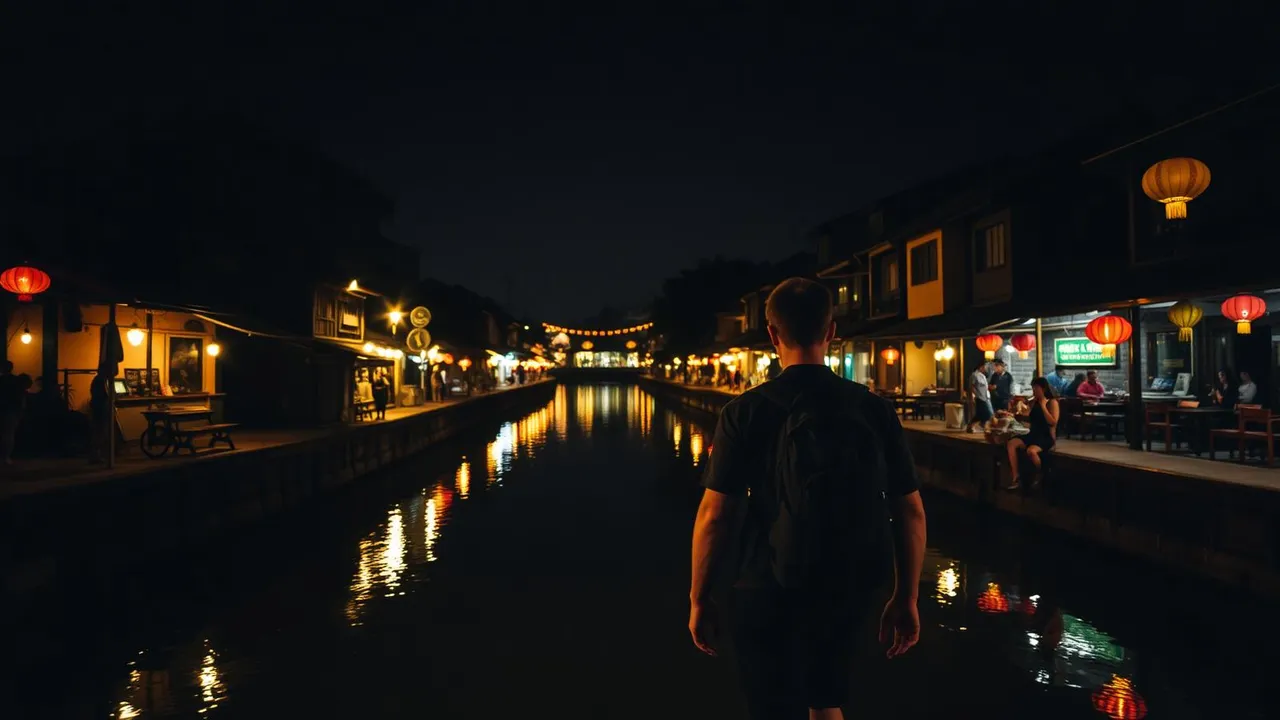
Overview, route and total cost
This itinerary runs north to south, starting in Hanoi and ending in Ho Chi Minh City (Saigon). The direction matters: weather is more reliable, the food gets progressively sweeter and lighter as you go south, and one-way flights home from Saigon are typically cheaper than from Hanoi.
Total realistic budget for 21 days: $900–1,200 per person on a backpacker setup (dorms, local food, sleeper buses, 1–2 paid tours per region). $1,800–2,400 on a mid-range setup (private rooms, taxis, a junk-boat cruise in Halong, occasional flights between regions).
The route covers roughly 1,700 km. You can do it entirely overland — overnight buses and the Reunification Express train link every stop — or save 2–3 days by flying Hanoi → Da Nang and Da Nang → Saigon. Both options are factored into the day-by-day breakdown below.
Saigon → Hanoi works equally well, especially May–September when the south is wettest and the north is at its best. Flights into Saigon are often cheaper from Australia and Singapore; Hanoi is closer for travelers coming via Hong Kong or southern China.
When to go (and when not to)
Vietnam is long and the climate varies wildly. There is no single perfect month for the whole country, but March and April are the closest you can get: the north is mild and dry, central Vietnam is sunny and warm, and the south is hot but not yet in the wet season.
Avoid: Tet (Vietnamese New Year, late January or early February) — almost every business closes for a week, train and bus tickets sell out, and prices double. Also avoid July–August in central Vietnam if you can; it is brutally hot and humid, and the central coast occasionally takes a typhoon hit.
The shoulder months of September to November are great for the north and centre but increasingly wet in the south. Pack a light rain jacket and accept that one or two days of your trip will simply be a write-off — that is part of Vietnam.
Visa, money and arrival logistics
Most Western passport holders now get a 90-day e-visa for around $25, processed online in 3–5 working days at the official government portal. Apply at least a week before flying. Some nationalities (UK, France, Germany, Spain, Italy, plus most ASEAN countries) get visa-free entry for 14–45 days — check the current rules at the time you book.
Land at Noi Bai (Hanoi) and take a Grab car to the Old Quarter for around 350,000 VND (~$14). Skip the airport money changers — Vietnam's ATMs (TPBank, Vietcombank, BIDV) give a far better rate. Cash is still king at street stalls; cards work in mid-range restaurants and hotels.
Get a local eSIM or SIM card on day one. Viettel, Vinaphone and Mobifone all offer 30-day unlimited 4G plans for around $8–12. You will use it constantly for Grab, Google Translate and offline maps.
Days 1–3: Hanoi
Base yourself in the Old Quarter — chaotic, cheap and walkable to almost every sight. Three days is the minimum to recover from jet lag, dial in your routine, and properly eat your way through the city. Less than that and Hanoi feels like an obstacle course rather than a destination.
Day 1: Walk the Old Quarter, do a free walking tour, eat bun cha at lunch (the Obama spot is fine but any busy stall is better), watch the chaos at Hang Da Market, finish at a beer corner on Ta Hien street.
Day 2: Ho Chi Minh Mausoleum complex in the morning (closes at 11:00, queues are huge), Temple of Literature, lunch around West Lake, Train Street coffee (now ticket-only but still worth it), water puppet show in the evening.
Day 3: Either a half-day cooking class or the Vietnamese Women's Museum and Hoa Lo Prison ('Hanoi Hilton'). Spend the rest of the day at one of the speciality coffee roasters — Hanoi is the egg-coffee and salted-coffee capital of the world.
Each Old Quarter street historically sold one product — Hang Bac was silver, Hang Ma was paper offerings. The food version is similar today: Bat Dan for pho bo, Lan Ong for traditional medicine snacks, Cha Ca for grilled fish with turmeric. Follow the queues.
Days 4–5: Sapa and the rice terraces
Take the overnight sleeper bus from Hanoi to Sapa (6h, ~$15) or the Limousine van during the day (5h, ~$20). The old Lao Cai sleeper train is no longer the most efficient option since the expressway opened — buses arrive at the Sapa town square directly.
Skip Sapa town's tourist strip and book a homestay in Ta Van or Lao Chai village (~$15 per night including dinner). A two-day trek with a local Hmong guide between villages, rice paddies and waterfalls runs $25–40 per day all inclusive and is one of the best memories most people bring home from Vietnam.
If you have only one extra day to spare on the whole trip, give it to Sapa. The terraced landscape is at its most photogenic May–September (water and green) and October (gold harvest). November–March can be cold, foggy and grey.
Days 6–7: Halong Bay or Lan Ha Bay
Halong Bay is on every Vietnam itinerary for a reason — and increasingly on every Vietnam complaint thread too. The fix is to book a 2-day, 1-night cruise into Lan Ha Bay instead of central Halong. Same limestone karsts, a fraction of the boat traffic, and you sleep on the water rather than commuting back to a hotel.
Mid-range cruises run $130–200 per person all inclusive (transport from Hanoi, three meals, kayaking, cave visit, cabin). Below $100 the boats get crowded and the food deteriorates fast; above $300 you are paying for marble bathrooms more than a better itinerary.
Day-trip versions exist but are not worth it. You will spend more time on the bus than on the water. Build in the overnight.
Days 8–9: Ninh Binh (Tam Coc and Trang An)
Often called 'Halong Bay on land', Ninh Binh is a flat green valley pierced by the same limestone karsts you saw at sea, with rivers winding between them. The town itself is unremarkable; the surrounding countryside is one of the most beautiful places in northeast Asia.
Rent a bicycle ($2/day) or a scooter ($6/day) and ride between Tam Coc (the river boat tour with women rowing with their feet), Hang Mua viewpoint (500 steps to the best panorama in Vietnam), and the Trang An boat circuit (3 hours, multiple caves, used in Kong: Skull Island).
Two nights is plenty. Trains and buses from Hanoi take just over 2 hours; the easiest base is a homestay around the Tam Coc area for $20–30 per night including breakfast on a balcony over the rice fields.
Days 10–11: Hue, the imperial capital
Fly or take the overnight train south to Hue. The train ride (12–14 hours, sleeper berth around $30) is one of the most scenic in Southeast Asia, especially the section between Hue and Da Nang the next morning.
Hue was Vietnam's imperial capital under the Nguyen dynasty and the city still revolves around the walled Citadel, the Forbidden Purple City inside it, and a string of royal tombs scattered through pine forests south of town. Two days is enough to do the Citadel, two tombs (Tu Duc and Khai Dinh are the best preserved), and the Thien Mu Pagoda.
Hue is also the centre of central Vietnamese cuisine, which is spicier and more refined than the north. Try bun bo Hue (lemongrass-beef noodle soup) and banh khoai (crispy stuffed pancake).
Days 12–14: Hoi An (and the Hai Van Pass)
Get to Hoi An via the Hai Van Pass motorbike tour — easy-rider style, you sit on the back and a local driver handles the bike while your bags follow in a van. Roughly $60–80 per person, 5–6 hours, and the road is exactly the one from Top Gear's famous Vietnam special.
Hoi An's lantern-lit Old Town is a UNESCO site, and yes it is touristy — but it is genuinely beautiful at night, the tailors really are world-class (allow 48 hours for a suit or dress), and the food scene punches well above the town's size. Stay 3 nights minimum, longer if you can.
Day trips from Hoi An: a half-day to My Son Cham temples (8th-century Hindu ruins, go early to beat the heat), the basket-boat ride in the coconut forest, or a beach day at An Bang. Book a cooking class at one of the family-run places out near Tra Que herb village — it is the single best food experience on this entire itinerary.
Avoid the names quoted in every blog (they are now factories). Walk the side streets, look for a small studio with one or two tailors visibly working, and bring a reference photo. A good two-piece suit costs $150–250; cheaper means corner-cutting on lining and stitching.
Days 15–16: Da Lat (optional skip)
Da Lat is a cool-climate hill station in the central highlands — pine forests, French colonial villas, waterfalls and coffee plantations. It is the only place in Vietnam where you will wear a fleece, and the contrast after the muggy coast is welcome.
Two days here is the standard: a canyoning trip ($60, includes abseiling down waterfalls), a coffee-farm visit, and an evening at the night market with strawberry wine. If you are running short on time or you came primarily for beaches and cities, this is the most skippable stop on the route.
If you skip Da Lat, fly or take a sleeper bus directly from Da Nang to Ho Chi Minh City and add the extra two days to either Hoi An or the Mekong Delta.
Days 17–19: Ho Chi Minh City (Saigon)
Saigon is louder, hotter and more chaotic than Hanoi — and most travelers end up liking it more than they expected. Base in District 1 or, for a more local feel and lower prices, District 3 or Binh Thanh.
Day 1: War Remnants Museum (heavy but essential), Reunification Palace, Notre Dame Cathedral and the Post Office, finish with rooftop drinks at one of the District 1 bars.
Day 2: Cu Chi Tunnels half-day trip ($15–25), back in the city for an evening street-food tour by scooter (~$50, every traveler we know rates it as the highlight of Saigon).
Day 3: Slow morning at a District 3 cafe, Ben Thanh Market, dinner in Cho Lon (Saigon's Chinatown) at one of the dim-sum or duck-rice spots.
Days 20–21: Mekong Delta
Most travelers do the Mekong as a day trip from Saigon and regret it — you spend more time on the bus than the river. The fix is a 2-day, 1-night overnight tour to Ben Tre or Can Tho ($40–80), which includes the early-morning Cai Rang floating market — the only one worth waking up for.
Highlights are slow boats through coconut-palm canals, sampan rides past stilt houses, fruit orchards, brick kilns, and overnight stays in family homestays. The food is sweet, herbaceous and unlike anything you have eaten further north.
Fly home from Tan Son Nhat (SGN) on day 22. Direct flights to Europe, Australia, Korea, Japan and the US all leave from here, often cheaper than equivalent Hanoi routes.
Booking transport and accommodation
Book intercity buses and trains through 12Go Asia or Baolau — English interfaces, instant e-tickets, and roughly the same prices as buying at the station. Sleeper buses are fully reclined pod-style and surprisingly comfortable; the train is slower but more scenic.
Hotels and homestays: Agoda tends to have the best inventory and rates inside Vietnam, with Booking.com a close second. Hostelworld is the right choice for dorms and party hostels. Always cross-check the same property in two sites — price differences of 15–25% are common.
Domestic flights: Vietnam Airlines (reliable, slightly pricier), VietJet (cheap, frequent delays, strict baggage), Bamboo Airways (improving). For a 3-week trip the two flight legs we would actually pay for are Hanoi → Hue/Da Nang and Da Nang → Saigon if you are pushed for time.
What to pack for 3 weeks in Vietnam
- Lightweight, quick-dry trousers (covered legs are needed for temples and pagodas)
- One warm layer for Sapa, Hue mornings, and overnight buses with brutal A/C
- Light rain shell — useful even in dry season
- Reef-safe sunscreen and a wide-brim hat
- Reusable water bottle with a built-in filter (avoid 21 days of plastic bottles)
- Universal travel adapter and a 20,000 mAh power bank for sleeper buses
- Comfortable walking sandals and one closed-toe pair for treks
- Small daypack for day trips, plus a packing cube for laundry separation
- Imodium, rehydration salts and any prescription meds in original packaging
- A few US dollars in small bills for visa-on-arrival fees if you need to extend
Frequently asked questions
Is 3 weeks enough for Vietnam?+
Yes — 21 days is the sweet spot. You can travel the full length of the country from Hanoi to the Mekong Delta with two days at each major stop, plus an overnight cruise in Halong Bay and a trek in Sapa. Less than two weeks forces you to pick a region.
How much does 3 weeks in Vietnam cost?+
A realistic backpacker budget is $900–1,200 per person for 21 days (dorms, local food, intercity buses). Mid-range with private rooms, taxis and a junk-boat cruise runs $1,800–2,400. Add $400–800 if you fly between the major regions instead of taking buses or trains.
Should I go north to south or south to north?+
North to south (Hanoi → Saigon) is slightly more popular because the food gets lighter and prices a touch cheaper as you go south. Reverse the route May–September when the south is wettest and the north is at its best.
Is Vietnam safe for solo backpackers?+
Yes. Violent crime against tourists is rare. The main risks are scooter bag-snatching in Saigon (keep your phone away from the kerb), inflated taxi fares from unbranded operators, and food poisoning from raw seafood. Stick with Grab, busy stalls, and basic hygiene precautions.
Do I need a visa for Vietnam?+
Most Western nationalities need a 90-day e-visa (about $25, applied for online 3–5 days in advance). UK, French, German, Spanish, Italian and most ASEAN passport holders get visa-free entry for 14–45 days. Always check the current rules at booking time as they change.
Topics & destinations
Some links may be affiliate links. We may earn a commission at no extra cost to you.