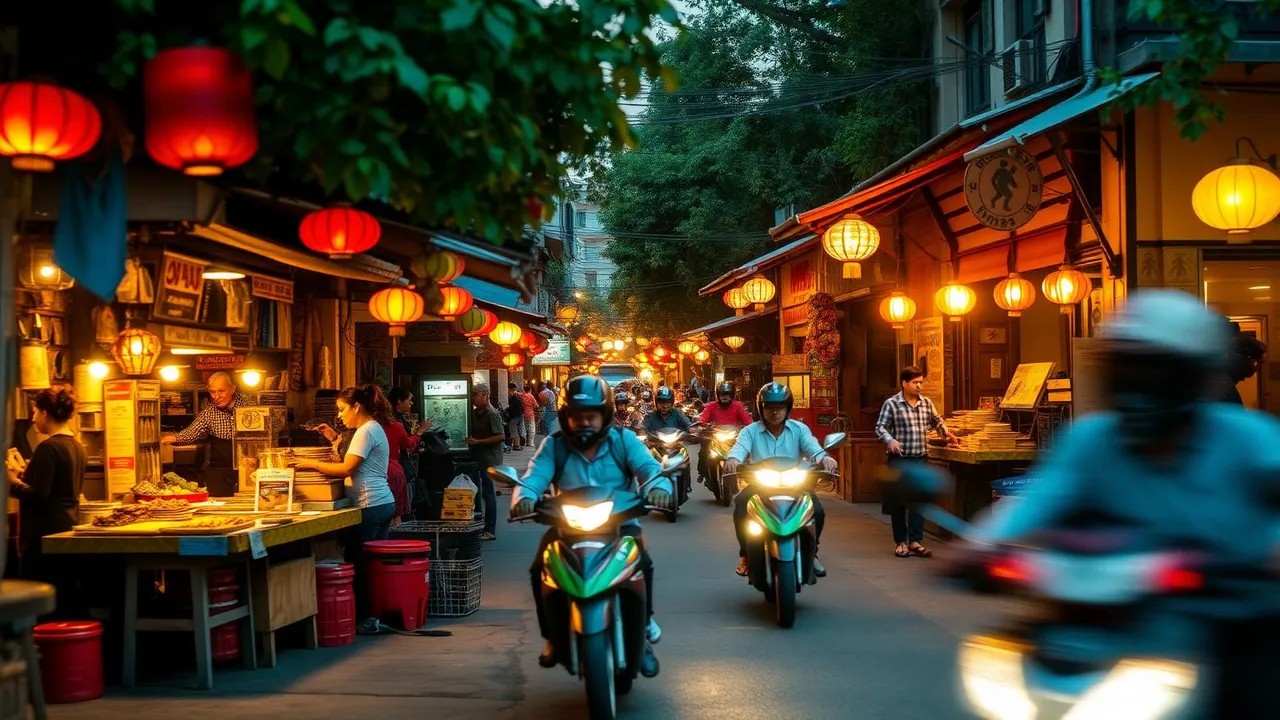
Where you go changes everything
Talking about a single Vietnam budget is a bit like talking about a single 'Europe' budget — it depends entirely on which region you spend most of your time in. The country roughly splits into four pricing zones.
Hanoi (north) is the cheapest of the big cities. A bowl of pho is still $1.50, draft bia hoi is 25 cents, and you can get a clean hostel bed in the Old Quarter for under $10. Sapa, Ha Giang and the northern mountains follow the same pricing — you'll spend more on transport to reach them but accommodation and food remain very cheap.
Da Nang, Hoi An and the central coast sit in the sweet spot. Boutique hotels in Hoi An's old town run $30–$60 a night, a beachfront resort in Da Nang is $50–$120, and food is a touch pricier than Hanoi because the area is more touristy.
Ho Chi Minh City is the most expensive on average — Saigon's District 1 has Western-priced rooftop bars and craft cocktails, but you can still eat banh mi for under $2 if you step one street back.
Phu Quoc and resort islands are a different country price-wise. Five-star resorts there easily hit $200–$400 a night and even mid-range stays cost more than the mainland equivalent.
Accommodation: $8 to $120 a night
Vietnam has some of the best accommodation value in Asia, especially for mid-range travelers. The country's hospitality scene has matured fast — most properties on Booking.com or Agoda are clean, well-reviewed and run by attentive family operators.
Hostels ($7–$14): in Hanoi, Hoi An, Da Lat and Ho Chi Minh City. Most include breakfast and decent Wi-Fi. Iconic chains like Vietnam Backpackers and Old Quarter View routinely run sub-$10 dorms.
Guesthouses and family hotels ($15–$30): private room with air-con and en-suite, often in a converted family townhouse. Hoi An is especially strong in this tier with garden-courtyard properties under $25.
Boutique hotels ($35–$70): pool, design, often breakfast included. Da Nang's beach district is the standout — large rooms with ocean view for $50 are normal.
Resort and luxury ($120–$250+): mostly Phu Quoc, Nha Trang, Mui Ne and a handful of Hanoi five-stars. Vietnam's luxury tier punches above its price internationally — a $180 resort here often beats a $400 equivalent in Thailand.
Book hotels two to four weeks ahead in high season (December–March in the south, April–August in the north) for the best rates. Last-minute walk-ins are still common in shoulder months.
Food: $1 pho to $25 tasting menus
Eating in Vietnam is the highlight of the budget. Street food is exceptional and cheap, and even mid-range restaurants undercut Western prices by a wide margin.
Street food staples: pho $1.50–$2.50, banh mi $1–$2, bun cha $2.50–$4, com tam $2–$3.50, banh xeo $2–$4. A coconut from a street vendor is 50 cents. A bia hoi (fresh draft beer) in Hanoi is still 20–30 cents a glass.
Cafés: Vietnamese coffee culture is huge. A ca phe sua da costs 50 cents at a roadside stall and $2–$3 at trendy cafés in Saigon's District 1 or Hanoi's West Lake area. Sit-down breakfast at a hipster café usually runs $4–$7.
Mid-range restaurants: a full meal at a tourist-friendly Vietnamese restaurant is $6–$12 per person including a drink. Add another $3–$5 for fresh beer or imported wine.
Upmarket dining: Hoi An, Hanoi and HCMC have a small but growing high-end scene with tasting menus and chef-led restaurants in the $25–$60 range — still a fraction of equivalent quality in Singapore or Bangkok.
Transport: Grab, sleeper buses, domestic flights and bikes
Getting around Vietnam is half the experience. The country is long and narrow, so you'll typically combine short Grab rides in cities with longer overnight buses, trains or domestic flights between regions.
Grab and city transport: a Grab car across town is $2–$5, a Grab bike $1–$2. Local buses in Hanoi and HCMC cost 30–50 cents but are slow and overcrowded — most travelers skip them.
Sleeper buses: the backbone of backpacker travel. Hanoi to Hue is about $18, Hue to Hoi An $8, HCMC to Da Lat $12. Beds are flat-ish, Wi-Fi spotty, blankets provided. Book through 12go.asia or your hotel.
Trains: the Reunification Express runs Hanoi–HCMC with overnight sleeper cabins. Hanoi to Da Nang in a soft sleeper is around $35–$45 and far more comfortable than a bus.
Domestic flights: Vietjet, Bamboo Airways and Vietnam Airlines fly the main corridors for $25–$60 one way if booked a week or two ahead. Hanoi–HCMC, Hanoi–Phu Quoc and HCMC–Da Nang are the most-flown routes.
Motorbike rental: $7–$12 a day for a small automatic in Hoi An or Hue, $15+ for a Honda XR or larger bike. Make sure your travel insurance actually covers you and bring an International Driving Permit (the standard tourist license is technically not valid).
Activities: Ha Long, Ninh Binh, cooking classes
Vietnam's headline experiences are surprisingly affordable, especially compared with similar offerings in Thailand or Indonesia.
Ha Long Bay overnight cruises: $90–$180 per person for a one-night cruise including transfers, meals and activities. Multi-day cruises in Bai Tu Long Bay (quieter sister bay) run $200–$350.
Ninh Binh and Trang An day trips: $25–$45 for a full-day tour with boat ride and Mua Cave climb. DIY is cheaper if you have time.
Cooking classes: a small-group Vietnamese cooking class in Hoi An or Hanoi is $25–$45 and usually includes a market visit and lunch — easily one of the best value half-days in the country.
Ha Giang Loop: 3- or 4-day motorbike loop with an easyrider driver runs $180–$280 all-in including bike, fuel, accommodation and most meals.
Phu Quoc and Nha Trang: snorkel and island-hopping day trips are $25–$60 per person. Sun World cable car and theme park in Phu Quoc is $35–$45.
Daily budgets by tier
Putting it all together, here are realistic 2026 daily budgets per person, excluding flights into and out of Vietnam.
Backpacker ($25–$35/day): dorm bed, all-street-food meals, 1–2 cheap beers, one paid activity per week, sleeper buses between regions. Allow $45 on cruise days.
Mid-range ($60–$90/day): private guesthouse or boutique room, mix of street food and sit-down restaurants, Grab rides daily, regular paid activities, occasional domestic flight, a couple of drinks.
Comfort ($120–$200/day): 4-star or design boutique, mid-range restaurants with the occasional upmarket dinner, private transfers and a domestic flight or two, all-included Ha Long cruise, daily massage or spa.
Luxury ($250+/day): 5-star resort, fine dining, private guides, helicopter to Ha Long. Possible in Phu Quoc, Hanoi, HCMC and Da Nang — capped only by how much you want to spend.
Is Vietnam worth it?
On a pure value basis, Vietnam may be the best-priced country in Asia right now. You get cheap food that is genuinely world-class, well-priced mid-range hotels, dramatic landscapes from karst bays to rice terraces, and a coastline that runs 3,260 km. The country handles backpackers and comfort travelers equally well — there is no point on the spectrum where you feel you're getting less than your money's worth.
Where Vietnam can disappoint is in convenience: sleeper buses, motorbike chaos in HCMC and persistent hawker pressure in tourist zones aren't for everyone. Set expectations, pay a little extra for trains and domestic flights when you need a break, and the trip will feel like a steal.
Plan your Vietnam trip
Ready to start booking? Here are the next steps.
Frequently asked questions
How much does a 2-week trip to Vietnam cost?+
Two weeks in Vietnam costs roughly $350–$500 for a budget backpacker, $850–$1,300 mid-range, and $1,700–$2,800 comfort, excluding international flights. Add a Ha Long cruise ($100–$180) and one or two domestic flights ($30–$60 each) on top.
Is Vietnam cheaper than Thailand in 2026?+
Yes, on most lines. Street food, beer and intercity buses are noticeably cheaper. Mid-range hotels are similar, with Vietnam slightly ahead in value. Thailand wins on convenience (better infrastructure, more direct flights) but Vietnam wins on raw cost.
What's the cheapest way to get around Vietnam?+
Sleeper buses for long distances and Grab bikes inside cities. Add the Reunification Express train for one or two legs to break up the journey — it's only a few dollars more than the bus and far more comfortable.
Do I need cash in Vietnam?+
Yes. Street food, sleeper buses, family guesthouses and markets are cash-only. Card is widely accepted at hotels, sit-down restaurants and Grab. Plan on withdrawing 2–4 million VND at a time to keep ATM fees down.
Topics & destinations
Some links may be affiliate links. We may earn a commission at no extra cost to you.