Why visit Vietnam
Vietnam packs more landscape variety per kilometre than almost anywhere in Asia — limestone karsts, terraced rice fields, sand dunes, deltas, beaches and cloud forest, all linked by an excellent overnight train. This Vietnam travel guide is built around the natural side rather than just the cities.
It is also still one of the better-value countries in the region. A backpacker budget of $30–45/day works easily; mid-range travellers spend $70–110/day for boutique hotels and a few private transfers.
Best places to visit in Vietnam
Hanoi (north). The Old Quarter is a maze of streets, street food and 1,000 years of history. Use it as your jumping-off point for Ha Long, Ninh Binh and Sapa.
Ha Long Bay and Lan Ha Bay. Famous for the limestone karsts. Lan Ha (off Cat Ba Island) is the quieter, less commercial alternative.
Ninh Binh. "Ha Long Bay on land" — karst peaks rising from rice paddies. Cycle the Tam Coc loop, climb to the Mua Cave viewpoint, sleep in a homestay.
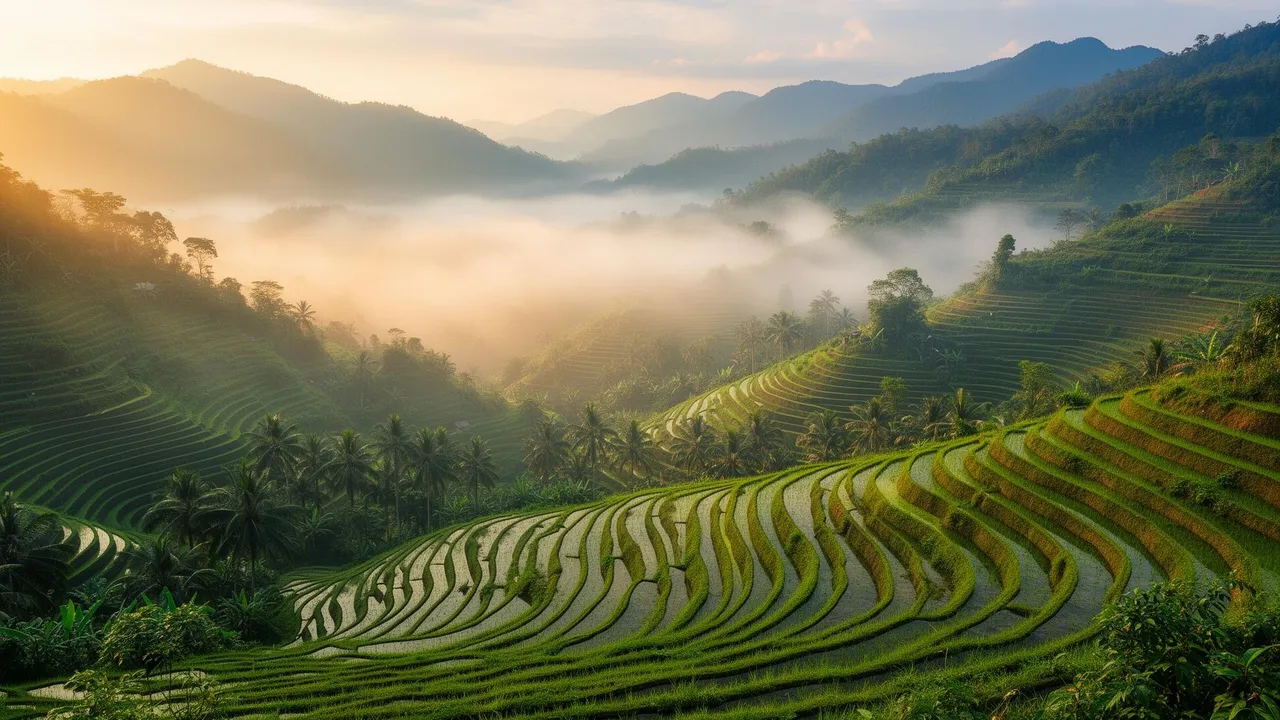
Sapa and the northern mountains. Terraced rice fields and ethnic-minority villages. Trek 2–3 days with a Hmong guide.
Hue and Phong Nha (central). Imperial citadel at Hue, the world’s biggest cave systems at Phong Nha. Phong Nha is one of Vietnam’s most under-rated stops.
Hoi An and the central coast. Lantern-lit old town, tailors, a strong food scene, and quiet beaches 10 minutes north and south. Stay 3 nights minimum.
Da Lat and the central highlands. Cool mountain town, waterfalls, coffee farms. A break from coastal heat.
Mekong Delta (south). Floating markets, rice barges, fruit orchards. Best done 2 nights, not as a day trip from Ho Chi Minh City.
Skip Nha Trang unless you are diving or want a Russian-tourist beach city. The other coastal stops (Hoi An, Quy Nhon, Phu Quoc) are better.
Best time to visit Vietnam
Vietnam is long — there is no single best season. October to April is the safest country-wide window. The north is cool and dry; the centre is dry from February; the south is dry October–April.
May–September is hot and wet in the centre and south, but green and quiet. The far north (Sapa) is best in September–October for rice harvest colour.
Read more on timing across the region in our Southeast Asia travel guide.
Vietnam on a budget
- Backpacker: $30–45/day (dorm or guesthouse, street food, sleeper bus)
- Mid-range: $70–110/day (3-star hotel with pool, mix of street food and sit-down, private transfers)
- Comfort: $180–300/day (boutique hotel, private driver, daily activity)
Street food in Vietnam is some of the world’s best value. A bowl of pho is 40,000–60,000 VND ($1.60–2.40); banh mi is 25,000–35,000 VND ($1–1.40); a beer at a corner bia hoi is 10,000 VND (40 cents).
Getting around Vietnam
Domestic flights on Vietjet and Bamboo Airways are the fastest way to cross the country (Hanoi–HCMC is 2 hours vs 30+ on the train). Tickets often $30–60 if booked 2+ weeks ahead.
Reunification Express train runs the full length of the coast. The Hanoi–Hue, Hue–Da Nang and Da Nang–Nha Trang stretches are the most scenic. Book a soft sleeper.
Sleeper buses are cheap and cover everywhere the train does not. Reasonable quality with the bigger operators (Futa Bus, Sinh Tourist).
Motorbike is the local way for short hops. For longer rides (Ha Giang loop), go with an experienced guide unless you ride confidently.
For our full breakdown of transport options, see the transportation guide.
Suggested 10-day Vietnam route
Days 1–2 — Hanoi. Old Quarter walking, Train Street, a street-food tour.
Day 3 — Ninh Binh. Day trip or overnight. Tam Coc boat ride, Mua Cave climb, cycle.
Days 4–5 — Lan Ha Bay overnight cruise. Skip the busiest Ha Long route, book a 2-day/1-night Lan Ha cruise instead.
Day 6 — Fly Hanoi to Da Nang, drive to Hoi An. Easy afternoon — Old Town lanterns at dusk.
Days 7–8 — Hoi An. An Bang beach morning, cycle the rice paddies, cooking class, tailor visit.
Day 9 — Day trip to Marble Mountains and Hai Van Pass (private driver or motorbike with luggage transfer).
Day 10 — Fly home from Da Nang.
Have 14 days? Add Phong Nha after Hoi An and finish in HCMC + the Mekong Delta. See our 7-day Vietnam itinerary for a shorter version.
Final travel tips
- E-visa: most passports — apply online 5–7 days before arrival, $25
- Cash is king for street food and rural areas — ATMs at major banks (Vietcombank, BIDV) have the best rates
- Cross the road in a steady, predictable walk — scooters flow around you; do not stop suddenly
- Bargain politely at markets — start at 50%; pay 70% feels right
- Drink bottled or filtered water; tap is not safe
- Tipping is appreciated but not expected (round up, or 5–10% in nicer restaurants)
Frequently asked questions
How many days do you need in Vietnam?+
10 days is the realistic minimum for north + centre; 14 days lets you add the south or Phong Nha. 7 days works for one region only.
Is Vietnam cheap in 2026?+
Yes — among the better-value countries in Asia. $30–45/day backpacker, $70–110/day mid-range.
Do you need a visa for Vietnam?+
Most passports need an e-visa (apply online, $25, ~3–5 working days). Some nationalities get visa-free entry for short stays — check before booking.
Is Vietnam safe for solo travellers?+
Yes. Petty theft (bag-snatching from scooters in HCMC) is the main risk; violent crime is rare. Solo women travellers report Vietnam as one of the easier countries in Asia.
Topics & destinations
Some links may be affiliate links. We may earn a commission at no extra cost to you.