Why visit Phuket
Some links in this guide may be affiliate links. We may earn a small commission if you book through them, at no extra cost to you. We only recommend services that travellers genuinely use to plan better trips.
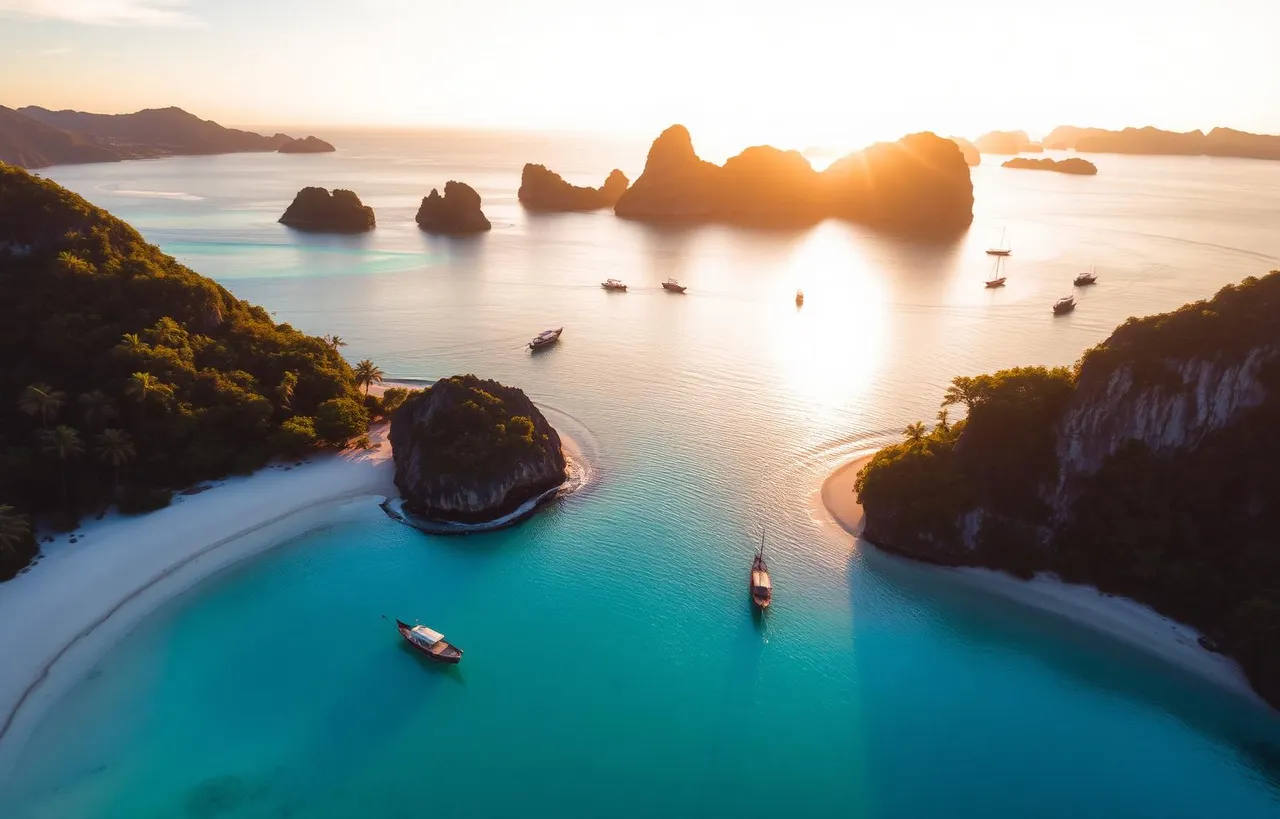
Phuket sits off Thailand's west coast in the Andaman Sea, connected to the mainland by the Sarasin Bridge. It is roughly the size of Singapore but built around long, palm-fringed beaches, low jungle hills and dozens of offshore limestone islands. The island packs in everything most travellers come to Southeast Asia for — turquoise water, cheap and brilliant food, easy-to-arrange tours, comfortable resorts at every price point, and a busy international airport that makes it possible to land in the morning and watch sunset from a beach the same day.
What sets Phuket apart from quieter Thai islands like Koh Lanta or Koh Tao is range. The west coast offers everything from the loud, neon energy of Patong to the silent boutique bays of Kata Noi and Surin. The east coast is calmer, with marinas and views toward Phang Nga Bay. The interior is jungle, waterfalls and viewpoints. You can plan a trip that is entirely about sunbeds and sunsets, or one that is jam-packed with snorkelling tours, cooking classes and temple visits — both work on the same island.
Phuket is also the natural base for the Andaman's most famous day trips. The Phi Phi Islands, James Bond Island, the Similan and Surin marine parks, Krabi and Railay all sit within easy reach by speedboat or ferry. If you want one island that gives you a serious beach holiday and a launchpad to the wider region, this is it.
Best time to visit Phuket
Phuket has two distinct seasons driven by the monsoon, and timing your trip well is the single biggest decision you will make.
High season — November to April. Dry, sunny, calm seas and the best snorkelling visibility. Daytime highs sit around 30–33 °C with low humidity by Thai standards. December and January are the peak weeks, with prices roughly 40–60 % above shoulder months. February and March are the sweet spot — same weather, smaller crowds, and many speedboat tours run at full schedule.
Shoulder — May and early November. Mixed weather but excellent value. Resorts discount 30–50 %, beaches are quiet, and most days are sunny with short afternoon storms. Some smaller islands like the Similans close (typically mid-May to mid-October) but Phi Phi and James Bond Island run year-round.
Low season — June to October. The southwest monsoon brings choppy seas on the west coast, occasional all-day rain and a red-flag warning on swimming beaches when the surf is heavy. The island is still beautiful — many travellers prefer it for the empty beaches and lower prices — but choose east-coast accommodation, expect tour cancellations, and never swim past red flags. Rip currents during monsoon months cause most of the island's serious incidents.
The single best month for value plus weather is late November, just before peak season prices kick in. The seas have calmed, the sun is reliable, and resort rates are still 20–30 % below Christmas week.
Getting to Phuket
By air. Phuket International Airport (HKT) is the second-busiest in Thailand. Direct flights connect Phuket with Bangkok (BKK and DMK, about 90 minutes, from US$30 one way), Kuala Lumpur, Singapore, Hong Kong, most Chinese hubs and many European cities seasonally. From outside Asia, the cheapest routings usually go via Bangkok, Singapore or Doha. To pre-check fares with flexible dates, you can compare cheap flights to Phuket before locking your route.
By bus and ferry. Overland buses connect Phuket with Bangkok (12–13 hours, around 900 THB) and Krabi (3 hours, 200 THB). Ferries link Phuket with Phi Phi (90 minutes, 450 THB), Krabi (2 hours), Koh Lanta and Koh Yao Noi. If you are island-hopping, build Phuket in as a hub rather than a single stop.
Airport to your hotel. The airport sits on the island's northern tip, 40–60 minutes from most beach areas. Options:
Pre-booked private transfer: 800–1,200 THB to most beaches, fixed price, door-to-door. Easiest after a long flight. You can compare Phuket airport transfer prices in advance to avoid the taxi queue.
Airport bus (Smart Bus or limousine): 100–200 THB to Patong, Kata, Karon, Rawai. Slower (90+ minutes) but the cheapest legitimate option.
Metered taxi: available but often refuses the meter; expect 800–1,000 THB to the south beaches.
Ride-hail (Grab / Bolt / inDrive): works at the airport, usually 600–900 THB to the southwest coast.
Best beaches in Phuket
Phuket has roughly 30 beaches and the choice can feel overwhelming. Here are the ones worth planning your trip around, grouped by what kind of holiday you want.
Patong Beach. The 3-km flagship beach. Wide golden sand, easy swimming in high season, the full menu of water sports, plus the only real nightlife scene on the island around Bangla Road. Stay here if you want everything on your doorstep; avoid it if you want quiet. Best time: early morning before the parasailing operators set up.
Kata and Kata Noi. A short drive south of Patong. Kata is a 1.5-km arc of sand with surf schools and a relaxed family vibe; Kata Noi is the smaller cove next door — quieter, slightly more upscale, with one of the island's best sunset viewpoints (Kata Karon Viewpoint) just above. Excellent middle-ground choice for first-timers.
Karon Beach. The longest beach on the island, 3 km of soft sand, far less developed than Patong. The sand here squeaks underfoot — a fun party trick. Mid-range resorts, casual seafood restaurants, and the wide stretch means even high season feels uncrowded.
Nai Harn. A natural cove on the south tip, backed by a freshwater lagoon. Considered by many residents the most beautiful swimming beach on the island. No high-rises, mostly small resorts and food trucks at sunset. Pair with Promthep Cape (the southernmost point, free sunset viewpoint) for a perfect afternoon.
Surin Beach. An upscale, quiet beach on the northwest coast. Boutique resorts, beachfront seafood, and a calmer crowd than the central beaches. Stay here for a slower, more design-led trip.
Bang Tao and Layan. An 8-km north-coast stretch dominated by larger luxury resorts (Banyan Tree, Andaman, Anantara). Best for resort-based holidays where you barely need to leave the property.
Freedom Beach. A hidden white-sand cove south of Patong, only reachable by a steep jungle path or a 10-minute longtail boat ride (about 200 THB return). Worth the effort — among the most beautiful beaches in Thailand.
Ya Nui. A tiny double-cove south of Nai Harn, with a small offshore islet you can swim to. The best snorkelling on the main island itself — bring a mask.
Mai Khao and Nai Yang. Long, empty beaches on the northwest coast right next to the airport. Backed by Sirinat National Park (entry 200 THB), so no high-rise development. Great for a calm pre- or post-flight stay; planes pass low overhead at Mai Khao for the famous landing shots.
If the sea is rough, switch beaches rather than risking a swim. The east coast (Rawai, Ao Yon) usually stays calm even when the west coast is closed.
Top things to do in Phuket
Beyond the beaches, the island packs a surprising amount of variety. The best activities are split between cultural sights, viewpoints, jungle and water-based experiences. Browse and pre-book in one place — comparing on a platform like Phuket activities and tickets typically saves 20–40 % versus the gate or tour-desk prices.
Big Buddha (Phra Phutta Mingmongkol). A 45-metre white marble statue on Nakkerd Hill with 360° views over Chalong Bay and Kata. Free entry, donations welcome. Dress modestly (knees and shoulders covered) — sarongs are provided at the entrance. Best at sunset.
Wat Chalong. The largest and most important Buddhist temple on the island. Free entry. Quiet in the morning, busy with tour groups by 11:00.
Phuket Old Town. A walkable grid of Sino-Portuguese shophouses painted in pastels, hidden cafés, street art and Sunday's Lard Yai walking street market. Spend a half-day wandering Thalang and Soi Romanee. The food at the Sunday market is some of the best on the island.
Promthep Cape. The southernmost point of the island, free, and the classic sunset viewpoint. Arrive 45 minutes before sunset to get a parking spot.
Kata Karon Viewpoint (Three Beaches Viewpoint). The postcard shot of Kata, Kata Noi and Karon laid out below. Free, accessible by scooter or songthaew.
Bangla Road, Patong. Thailand's most concentrated nightlife strip. Loud, neon, and not for everyone — but worth a walk through once for the spectacle, even if you do not stop.
Thai cooking class. Half-day classes (1,200–1,800 THB) include a market tour and 4–5 dishes you cook and eat. Pum Restaurant in Patong, Blue Elephant in Old Town and the Phuket Thai Cookery School in Ko Sirey are all reliable picks.
Muay Thai. Watching a fight at Bangla Stadium or Patong Boxing Stadium runs 1,200–2,000 THB and is a serious cultural experience. Training a session at any of the dozens of camps (Tiger Muay Thai, Sinbi) costs around 400–600 THB drop-in and is open to all levels.
Bang Pae and Ton Sai waterfalls. Inside Khao Phra Thaeo National Park. 200 THB entry. Combine with a visit to the Gibbon Rehabilitation Project nearby (donation entry, ethical viewing-only).
Phuket FantaSea. A large cultural theme-park-meets-show in Kamala. Polarising — some travellers love the spectacle, others find it kitsch. Pre-book if you go.
Snorkelling and diving. The reefs around Phuket itself are tired; the magic is on day trips (Phi Phi, Surin, Similans, Racha Islands). Half-day dive trips from Chalong start around 3,500 THB, full Similan trips 5,500–7,000 THB.
Best day trips from Phuket
If you only book one day trip from Phuket, make it Phi Phi. If you book two, add Phang Nga Bay. Most are speedboat tours that leave Chalong Pier around 08:00 and return by 17:00 — bring sea-sickness pills if you are sensitive.
Phi Phi Islands. The most famous day trip in Thailand. A typical speedboat tour (1,400–2,000 THB) covers Maya Bay (made famous by The Beach; reopened with strict visitor limits in 2022), Pileh Lagoon, Viking Cave, Monkey Beach, snorkelling and lunch on Phi Phi Don. Book the early option to beat the crowds at Maya Bay.
Phang Nga Bay and James Bond Island. Limestone karst islands rising out of jade-green water, plus the iconic spire from The Man with the Golden Gun. Best done by a smaller-boat or longtail tour rather than a big speedboat. Sea-kayaking through the hongs (hidden lagoons) is the highlight. Around 1,400–1,800 THB.
Similan Islands. A national park 65 km northwest of Phuket, only open mid-October to mid-May. The best snorkelling and diving accessible as a day trip from the island — granite boulders, turquoise water and clear visibility. Full-day speedboat tour around 3,500 THB including park fees.
Surin Islands. Further north, quieter, slightly less spectacular than the Similans but with healthier coral. Same season window.
Racha Yai and Racha Noi. Smaller, calmer day trip closer to Phuket. Excellent for first-time snorkellers; the water is glass-clear. 1,200–1,600 THB.
Khao Sok National Park. A 90-minute drive north into the mainland — ancient rainforest, the surreal Cheow Lan Lake and floating bungalows. Doable as a long day trip (2,500–3,000 THB) but better as an overnight.
Krabi and Railay. Reachable by ferry (2 hours) or as a guided day tour. Railay's beaches and rock-climbing are spectacular. If you have an extra night, sleep over.
Where to stay in Phuket
Each area on the island gives a different trip. Pick the one that matches your priorities — the wrong base can quietly ruin a Phuket holiday because driving between coasts in traffic eats hours every day.
Patong — for nightlife, water sports and easy logistics. Best for first-timers who want everything walkable. Loud and busy.
Kata / Kata Noi — the most popular all-rounder. Good beaches, calmer than Patong, plenty of restaurants, easy taxis to nightlife if wanted. Top pick for first-time visitors.
Karon — quieter mid-range version of Patong. Long beach, fair prices.
Nai Harn / Rawai — for a slower, more local trip. Best food scene, walkable to Nai Harn beach, easy to Promthep Cape and Ya Nui.
Surin / Bang Tao — for quiet boutique or luxury resort stays. Less to do outside the resort.
Old Town — for culture, cafés and the Sunday night market. No beach (you would taxi to Patong/Kata) but a brilliant 1–2 night add-on.
Mai Khao / Nai Yang — for resort calm next to the airport, especially handy for early flights.
Hostel dorms run 250–500 THB. Budget guesthouses 600–1,200 THB. Mid-range hotels 1,800–3,500 THB. Luxury resorts 6,000 THB and up. Book 4–8 weeks ahead for high season; in low season the same room can be 40 % cheaper.
Food and night markets
Phuket eats very well. The island has its own UNESCO-listed Sino-Thai cuisine plus the full menu of southern Thai classics. Eat at street stalls and local restaurants — tourist menus on the beach roads charge 2–3× the price for worse food.
Dishes to try. Mee Hokkien (yellow noodles in a thick broth with seafood, a Phuket specialty), Moo Hong (slow-braised pork belly), Khanom Jeen Nam Ya (rice noodles with curry sauce), Massaman curry, Tom Yum Goong, Pad See Ew, and freshly grilled snapper on any beach restaurant. Roti with banana and condensed milk (60 THB) is the late-night dessert of choice.
Night markets to plan for: Lard Yai (Sunday Walking Street, Old Town) — the best food market on the island. Chillva Market (Wed–Sat, Phuket Town) — hipster food trucks and live music. Banzaan Market (Patong) — daily fresh seafood you can pick out and have cooked at the stalls above. Naka Weekend Market (near Central Phuket, Sat–Sun) — huge, half food and half clothing.
Expect to spend 80–150 THB per dish at street stalls, 180–350 THB at sit-down local restaurants, 500–900 THB at mid-range tourist restaurants, and 1,500 THB+ at resort restaurants. Bottled water 10–15 THB at 7-Eleven, fresh fruit smoothies 60–80 THB.
Getting around Phuket
This is the part of Phuket many travellers underestimate. The island is large (50 km top-to-bottom) and has no proper public transport network on most routes. Plan transport before you arrive.
Scooter rental. 200–300 THB/day. The cheapest and most flexible way to get around. Honest warning: scooter accidents are the single most common cause of serious injury for tourists in Thailand. Only ride if you already ride at home, always wear a helmet, never ride after drinking, and check that your travel insurance covers motorbikes (most policies require a valid motorbike licence from your home country).
Songthaews (shared blue trucks). Run fixed routes between Phuket Town and the major beaches for 30–50 THB. Slow but very cheap. Stop running by early evening.
Tuk-tuks. The infamous Phuket tuk-tuks. Fixed, high prices (200–600 THB even for short trips) and no meter. The local cartel system means there is little price flex. Use for short hops, not as a default.
Grab, Bolt and inDrive. All three ride-hail apps work on the island and are usually 30–60 % cheaper than tuk-tuks. The catch: in some beach areas (notably parts of Patong and Kata), tuk-tuk drivers prevent Grabs from picking up at the curb — meet your driver around the corner.
Pre-booked private cars and day-hire drivers. Around 1,800–2,500 THB for a full day with driver, useful for island sightseeing days. Compare quotes in advance instead of negotiating at your hotel.
Car rental. From 1,000 THB/day. Worth it if you plan to range widely (Old Town + Khao Phra Thaeo + multiple beaches) or stay in a quieter area like Bang Tao.
A practical 7-day Phuket itinerary
This itinerary balances beach time with day trips and culture, and assumes a base in Kata or Karon (the best all-round area). Skip a day or two if you only have 4–5 days.
Day 1 — Arrive and settle. Airport transfer to Kata. Lunch at a local restaurant on Kata Road. Afternoon on the beach. Sunset at Kata Karon Viewpoint. Dinner at Two Chefs.
Day 2 — South of the island. Scooter or songthaew south to Nai Harn beach, lunch at the Rawai seafood market, swim at Ya Nui, sunset at Promthep Cape, dinner in Rawai.
Day 3 — Phi Phi day trip. Full-day speedboat tour to Phi Phi + Maya Bay + Bamboo Island. Be at Chalong Pier by 07:30. Back by 17:00, easy dinner near your hotel.
Day 4 — Big Buddha and Old Town. Morning visit to the Big Buddha and Wat Chalong. Afternoon in Phuket Old Town — coffee at Bookhemian, wander Thalang Road, dinner at Raya. If it is a Sunday, the Lard Yai Walking Street is unmissable.
Day 5 — James Bond Island and Phang Nga Bay. Small-boat or longtail tour with sea-kayaking through the hongs. The most photogenic day trip after Phi Phi. Back by mid-afternoon, beach evening.
Day 6 — Slow day or northern beaches. Pick one: a Thai cooking class in the morning, an afternoon at Freedom Beach, or a drive up to Surin and Bang Tao for a quieter beach day. Optional Muay Thai fight in the evening at Bangla Stadium.
Day 7 — Departure. Late checkout if your flight allows. If you have a morning to spare, do a final swim at Kata or a quick visit to the airport-side Nai Yang Beach before flying out.
Reserve Phi Phi and James Bond for two non-consecutive days. Speedboat fatigue is real and the back-to-back tours often blur into one.
Phuket daily budget estimate
A realistic per-person daily budget in Phuket (excluding flights and tour days):
Budget traveller: 1,200–1,800 THB / US$33–50. Hostel dorm or basic guesthouse, street food and local restaurants, songthaew transport, mostly free beaches.
Mid-range: 2,500–4,500 THB / US$70–125. 3-star hotel, mix of local and tourist restaurants, Grab/scooter, one paid attraction or tour.
Comfort: 6,000–12,000 THB / US$165–330. 4–5 star beach resort, sit-down restaurants, private drivers, premium tours.
Add roughly 1,500–3,500 THB per person for each speedboat day trip. The single biggest variable is accommodation — the same 3-star room in Kata can be 1,200 THB in September and 3,800 THB at New Year.
Money-saving and safety tips for Phuket
Pre-book tours online. Counter and tour-desk prices are routinely 30–40 % higher than the same operator on a platform. Read recent reviews.
Eat where Thais eat. A 300 THB pad thai on the beach road is a 70 THB pad thai one street back, often better.
Respect the red flag. If the lifeguard flag is red, the sea is closed for a reason — usually rip currents. Most drowning incidents in Phuket involve tourists who swam past red flags in low season.
Use the airport meter taxi or pre-booked transfer. Skip the tuk-tuk hawkers in the arrivals hall.
Insure your scooter, or do not ride. Confirm motorbike coverage in writing from your travel insurer. Many standard policies exclude motorbikes entirely. If you have any doubt, take songthaews and Grabs instead.
Watch for jet-ski and rental scams. Always photograph the scooter or jet-ski for existing scratches before signing the rental form, and never hand over your original passport — a photocopy is enough.
Carry a refillable water bottle. Most hotels offer free refills. Saves 30–60 THB per day and a lot of plastic.
Use an eSIM rather than airport SIM kiosks. A 7-day Thailand eSIM is 8–12 USD versus 600 THB+ at the airport, and it activates before you land. You can check Thailand eSIM options before your flight.
Withdraw larger amounts at ATMs. Every Thai ATM charges a 220 THB foreign-card fee per withdrawal regardless of amount — pull 10,000 THB at a time, not 2,000.
Tip modestly. Not customary on small bills; rounding up at restaurants and 50–100 THB for tour guides is appreciated.
If your flight is delayed or cancelled on the way to Phuket, check flight compensation eligibility — many travellers do not realise they qualify for several hundred euros under EU and UK rules.
Recommended travel tools for Phuket
A short, honest list of what is actually useful for a Phuket trip. We have used all of these on real trips to Thailand.
Flights: Kiwi.com is excellent for routing via Bangkok, Singapore or Kuala Lumpur, which often beats direct flights from Europe by 30 %. See our companion guide to finding cheap flights to Asia.
Activities and tours: Klook, KKday and Tiqets consistently undercut tour-desk prices on Phi Phi tours, Big Buddha tickets and Phang Nga Bay trips by 20–40 %. Always compare two platforms before booking.
Airport transfer: GetTransfer is useful for comparing private-transfer prices in advance instead of haggling at the airport.
eSIM: Yesim, Saily and GigSky all sell Thailand and Asia-regional data plans starting around 8 USD for a week. Activate before boarding.
Car rental: only useful if you are staying in a quieter area like Bang Tao or planning to range the whole island. Compare on a multi-supplier platform — quoted prices at airport counters are typically higher.
VPN: useful for accessing your home banking, streaming and email on hotel Wi-Fi. NordVPN works reliably across Thailand.
For broader Thailand planning, see our Thailand travel guide, the best beaches in Thailand roundup, and the Phuket vs Krabi comparison.
Frequently asked questions
Is Phuket worth visiting in 2026?+
Yes. Phuket remains the most accessible beach destination in Southeast Asia, with year-round flights, a huge range of accommodation, dozens of beaches and the best line-up of day trips in the Andaman Sea — Phi Phi, James Bond Island and the Similans are all easy from here. It is especially good for first-time visitors to Thailand.
How many days do you need in Phuket?+
Five to seven days is ideal. Three days is enough for a beach-only trip; a full week lets you combine beach time with two major day trips (Phi Phi and Phang Nga Bay), a culture day in Old Town and a slower beach day. Add 2–3 more nights if you also want to visit Khao Sok or Krabi.
What is the best month to visit Phuket?+
Late November through early April is the dry, calm-sea high season. The single best month for combining good weather with reasonable prices is late November or February. December and January are peak — book accommodation 6–8 weeks ahead.
Is Phuket expensive?+
Phuket is one of the more expensive Thai islands, but still affordable by international standards. Budget travellers manage on 1,200–1,800 THB per day, mid-range trips run 2,500–4,500 THB, and the same money in southern Europe or Australia would buy roughly half the experience.
Is Phuket safe?+
Phuket is generally safe for travellers. The two real risks are scooter accidents (rent only if experienced, always wear a helmet, confirm insurance covers motorbikes) and rip currents on west-coast beaches during the May–October monsoon (never swim past red flags). Petty theft is uncommon but lock valuables in your hotel safe.
Where should I stay in Phuket for the first time?+
Kata or Kata Noi is the best first-timer base. Good swimming beach, plenty of mid-range hotels and restaurants, easy transport, near the famous Kata Karon Viewpoint and Big Buddha, and quieter than Patong while still being central. Karon is a close second.
Is Patong worth staying in?+
Patong is worth staying in only if you specifically want nightlife and water sports on your doorstep. The beach is good, but the area is loud, traffic is heavy, and the famous Bangla Road is intense. Most travellers visit Patong for an evening from a calmer base like Kata or Karon.
Phuket or Krabi: which is better?+
Phuket has more flights, more accommodation choice, more nightlife and easier day trips. Krabi (especially Ao Nang and Railay) has more dramatic scenery and a calmer atmosphere. For a first trip with limited time, Phuket usually wins on logistics; for a quieter second visit, Krabi is the upgrade.
Topics & destinations
Some links may be affiliate links. We may earn a commission at no extra cost to you.